
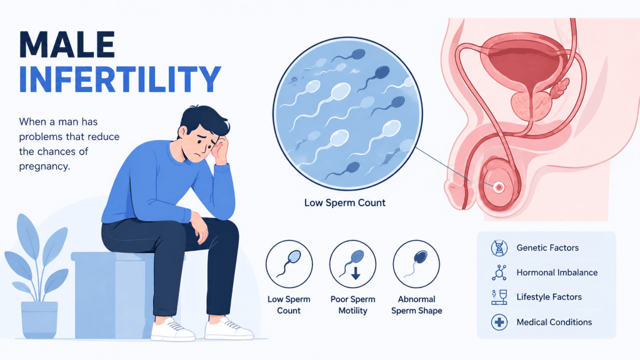
Male infertility affects around 1 in 6 couples trying to conceive in the UK, and is a contributing factor in 30 to 40% of all fertility cases. Despite how common it is, the cause often goes undiagnosed — in 40 to 50% of affected men, no clear reason is ever found. Understanding the most likely causes is the first step, whether you are trying to conceive or considering donating your sperm.
What Are the Most Common Causes of Male Infertility?
Problems with semen quality
The most frequent cause of male infertility is poor semen quality. A semen analysis evaluates three key factors: sperm count, motility (movement), and morphology (shape). Problems with any one of these can make fertilisation difficult.
Azoospermia means no sperm is present in the ejaculate at all — due either to a production failure or a blockage. It affects around 5% of infertile men. Oligospermia refers to a low sperm count, defined by the World Health Organization as below 15 million sperm per millilitre of semen. Even when count is normal, poor motility or abnormal morphology can prevent successful fertilisation.
Ready to start your project?
Join +450,000 members who find their co-parent or sperm donor
Start free✓ Free ✓ No commitment ✓ Verified
Ejaculatory disorders
Several ejaculatory conditions are linked to male infertility. Ejaculatory duct obstruction (EDO) can prevent sperm from reaching the ejaculate even when the testes are producing it normally. Retrograde ejaculation occurs when sperm travels into the bladder rather than out of the penis. Erectile dysfunction — caused by physical or psychological factors — can also make natural conception very difficult or impossible. Read more about maintaining sexual wellbeing during fertility treatment.
Varicocele
Around 15% of adult men develop varicoceles — enlarged veins in the scrotum similar to varicose veins. These can raise scrotal temperature and impair sperm production, quality, and motility. Varicocele is one of the most treatable causes of male infertility, often addressed with minor surgery.
Vasectomy and previous surgery
Men who have had a vasectomy may subsequently develop antibodies that reduce sperm motility or damage semen quality, even if the procedure was later reversed. Other testicular surgeries and injuries can similarly affect sperm production long-term.
Medications
Certain drugs are known to impair male fertility. According to NHS guidance on infertility causes, these include anabolic steroids, chemotherapy agents, sulfasalazine (used for Crohn’s disease and rheumatoid arthritis), and some herbal remedies. If you are on long-term medication and having difficulty conceiving, speak to your GP about possible alternatives.
Lifestyle factors
Smoking, excessive alcohol consumption (more than two drinks per day), recreational drug use, and obesity are all associated with reduced sperm quality. Poor nutrition — particularly diets high in refined carbohydrates — and wearing tight clothing that raises scrotal temperature can also play a role. Stress is an additional factor, though its direct effect on male infertility is harder to quantify.
Other causes
Hormone imbalances such as hypogonadism (abnormally low testosterone) can directly affect sperm production. Autoimmune conditions, sexually transmitted infections, and genetic factors — including Klinefelter syndrome or Y-chromosome microdeletions — account for a further subset of cases.
When Should You Seek Help?
A couple is typically considered infertile after 12 months of regular unprotected sex without conception — or 6 months if the female partner is over 35. At that point, both partners should be assessed. For men, this begins with a semen analysis and may include blood tests to check hormone levels.
Identifying the cause matters because treatment options and costs vary significantly depending on the diagnosis.
What Treatments Are Available for Male Infertility?
Treatment depends on the underlying cause. The main options include:
| Cause | Possible treatment |
|---|---|
| Varicocele or blockage | Minor surgical correction |
| Low sperm count or poor motility | IUI (intrauterine insemination) with partner sperm |
| Severe sperm abnormalities | ICSI (intracytoplasmic sperm injection) as part of IVF |
| No sperm in ejaculate (azoospermia) | Surgical sperm retrieval + ICSI |
| Hormone imbalance | Hormone therapy |
| Severe or untreatable male infertility | Donor sperm with IUI or IVF |
According to the HFEA, ICSI is the most common and successful treatment for sperm-related male infertility. It involves a single sperm being injected directly into the egg and is performed as part of an IVF cycle. Where sperm cannot be retrieved at all, using a donor is a well-established alternative.
Frequently Asked Questions
Can male infertility be cured?
It depends on the cause. Some cases of male infertility — such as varicocele or hormonal imbalance — respond well to treatment. Others, such as genetic conditions causing azoospermia, are not reversible, but assisted reproduction techniques including ICSI or donor sperm can still result in pregnancy.
Does lifestyle really affect male fertility?
Yes. Smoking, obesity, alcohol, and drug use are all linked to reduced sperm quality. Making targeted lifestyle changes before trying to conceive can improve outcomes, though results vary depending on the underlying cause of male infertility.
What is the first test for male infertility?
A semen analysis is the standard first investigation. It measures sperm count, motility, and morphology. Results are compared against WHO reference values and help guide next steps, including whether further blood tests or imaging are needed.
If you are navigating fertility challenges and exploring all your options — including co-parenting or using a sperm donor — CoParents.co.uk connects people across the UK who are building families in different ways. Create your free profile and find the right match for your situation.