
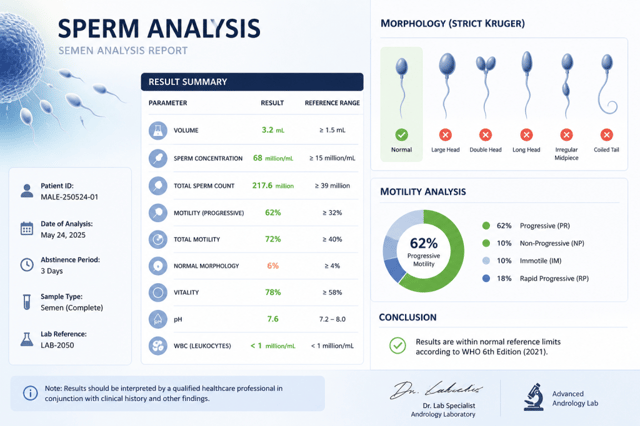
A sperm analysis — also called a semen analysis or sperm test — is the most important diagnostic tool for assessing male fertility. It measures the quantity and quality of sperm in a semen sample using reference values set by the World Health Organization (WHO). Around 1 in 7 couples in the UK experience difficulty conceiving, and male fertility factors contribute to around 40% of those cases. Whether you are trying to conceive, considering becoming a sperm donor, or simply want to understand your reproductive health, understanding what this test measures and what the results mean is an essential first step.
What Does a Sperm Analysis Measure?
A comprehensive sperm analysis evaluates six core parameters, each of which plays a different role in fertility. A home test kit from a pharmacy can tell you your approximate sperm count, but it cannot replace a full clinical assessment. A clinic-based sperm analysis examines:
- Sperm count (concentration) — the number of sperm per millilitre of semen. The WHO 2021 lower reference limit is 16 million sperm per ml, or 39 million per ejaculate total. A count below this is called oligospermia.
- Sperm motility — the percentage of sperm that are moving. Total motility should be at least 42%, with progressive motility (forward movement in a straight line) at a minimum of 30%. Low motility is called asthenozoospermia.
- Sperm morphology — the shape and structure of individual sperm cells. The WHO reference value is that at least 4% of sperm should have normal morphology. Abnormal morphology is called teratozoospermia.
- Semen volume — the total amount of semen produced per ejaculate. The lower reference limit is 1.4 ml. Low volume can indicate a blockage or gland dysfunction.
- Sperm vitality — the percentage of live sperm in the sample. At least 54% should be alive. Low vitality (necrozoospermia) can affect fertility even when count and motility appear acceptable.
- pH and viscosity — the acidity and thickness of the semen, which affect how well sperm can swim and survive.
For a deeper dive into what your individual results mean, see our detailed guide to semen analysis results and what each value means.
Ready to start your project?
Join +450,000 members who find their co-parent or sperm donor
Start free✓ Free ✓ No commitment ✓ Verified
When Should You Get a Sperm Analysis?
According to the NHS guide to diagnosing infertility, a sperm analysis is one of the first tests a GP will recommend if a couple has been trying to conceive without success for 12 months (or 6 months if the female partner is 36 or older). You should also consider the test earlier if you have any of the following risk factors:
- Previous chemotherapy or radiotherapy
- A history of undescended testicles or testicular injury
- Known varicocele (enlarged veins in the scrotum)
- A past sexually transmitted infection such as chlamydia or gonorrhoea
- Regular heavy alcohol intake, smoking, or recreational drug use
- You are planning to become a sperm donor and need to confirm you meet HFEA donor eligibility criteria
If you are considering sperm donation, semen analysis is a mandatory part of the screening process at any HFEA-licensed clinic. The clinic will carry out a full semen analysis alongside STI screening and genetic testing before accepting you as a donor.
How to Get a Sperm Analysis in the UK
You can request a sperm analysis through your GP, who can refer you to an NHS fertility or andrology clinic. Private testing is also available directly from fertility clinics without a referral, and typically costs between £120 and £200. Home test kits are available over the counter at pharmacies and online for under £50, but they measure only sperm count — not motility, morphology, vitality or volume — so they should be seen as a preliminary screening tool rather than a substitute for a full clinical test.
To produce the most reliable sample, abstain from ejaculation for between 2 and 5 days before the test. Abstaining for fewer than 2 days reduces sperm count; more than 7 days can impair motility. The sample must be analysed within 60 minutes of production, which is why most clinics require you to produce the sample on-site or bring it in within the required window. For more on sperm count specifically, see our guide to what sperm count means and how to understand your results.
What Conditions Can Affect Your Sperm Analysis Results?
Varicocele
A varicocele is an enlargement of the veins inside the scrotum, similar to a varicose vein. It is one of the most common causes of poor sperm analysis results in men, affecting around 15% of all men and up to 40% of those investigated for infertility. A varicocele can raise the temperature inside the scrotum, which impairs sperm production and quality. Many men with varicocele have no symptoms, which means it may only be discovered through a fertility investigation. Surgical treatment can improve results in some cases.
Prostatitis
Prostatitis — inflammation or infection of the prostate gland — can affect semen quality, particularly volume and pH, and can contribute to abnormal results. It affects men of all ages and does not always cause obvious symptoms. Bacterial prostatitis is typically treated with antibiotics. If you have experienced symptoms such as pelvic pain or discomfort when urinating, mention this to your GP when requesting a referral.
Sexually Transmitted Infections
Chlamydia and gonorrhoea are two of the most common STIs in the UK and both can damage the male reproductive tract if left untreated. Chlamydia in particular often causes no symptoms but can lead to epididymitis — inflammation of the tube that stores and carries sperm — which may impair sperm motility and cause abnormal findings. Both conditions are detected through routine STI screening, which is typically included alongside a clinical sperm analysis at a fertility clinic. If you are testing as part of a donor assessment or pre-conception check, request STI screening at the same appointment.
How Lifestyle Affects Your Sperm Analysis Results
Several lifestyle factors have a direct and measurable impact on sperm analysis results. The good news is that many of these are reversible with sustained changes:
- Smoking reduces sperm count, motility and morphology. Studies show that male smokers have around 13% lower sperm density than non-smokers on average. Stopping smoking is one of the most effective lifestyle changes for fertility.
- Alcohol lowers testosterone levels and impairs sperm production. Heavy regular drinking is associated with reduced count, motility and morphology in fertility testing. Current NHS guidance recommends no more than 14 units per week.
- Body weight matters: obesity is linked to hormonal imbalances that reduce testosterone and sperm production. Men with a BMI above 30 are more likely to show abnormal results than men of a healthy weight.
- Recreational drugs — including cannabis, cocaine and anabolic steroids — suppress testosterone and impair spermatogenesis. Anabolic steroids in particular can cause severe and sometimes long-lasting suppression of sperm production.
- Heat exposure to the scrotum — from saunas, hot baths, or tight clothing — can temporarily reduce sperm count. Sperm production is most efficient at slightly below body temperature.
- Diet and nutrition also play a role. Diets rich in antioxidants (found in fruits, vegetables, nuts and seeds) are associated with better fertility parameters, while diets high in processed food and saturated fat are linked to lower quality results.
Because sperm takes approximately 74 days to develop (spermatogenesis), lifestyle changes need to be sustained for at least three months before a repeat test will reflect their full effect.
Sperm Analysis WHO Reference Values (2021)
| Parameter | Lower reference limit (WHO 2021) | What a low result indicates |
|---|---|---|
| Sperm concentration | 16 million/ml | Oligospermia |
| Total sperm count | 39 million/ejaculate | Oligospermia |
| Progressive motility | 30% | Asthenozoospermia |
| Total motility | 42% | Asthenozoospermia |
| Normal morphology | 4% | Teratozoospermia |
| Semen volume | 1.4 ml | Hypospermia |
| Sperm vitality | 54% live | Necrozoospermia |
What Happens if Your Sperm Analysis Results Are Abnormal?
An abnormal result does not mean you cannot father a child. Many men with results below WHO reference values conceive naturally or with assisted reproduction. According to the NHS guidance on low sperm count, treatment options include lifestyle changes, medication to address underlying hormonal imbalances, surgical correction for conditions such as varicocele or blocked ducts, intrauterine insemination (IUI), and IVF with intracytoplasmic sperm injection (ICSI) — where a single sperm is injected directly into an egg.
If your results are borderline, it is advisable to repeat the test after three months to account for natural variability. Sperm parameters can fluctuate significantly between samples in the same individual, so a single abnormal result is not definitive.
If you are considering co-parenting or sperm donation and want to understand your fertility health before connecting with potential partners, CoParents.co.uk has supported over 150,000 people since 2008 in finding the right path to parenthood. See also our guide to how to donate sperm in the UK, which covers the full medical and legal process for prospective donors.
Frequently Asked Questions About Sperm Analysis
Is a home sperm test as accurate as a clinic sperm analysis?
No. Home sperm test kits measure only sperm count and sometimes basic motility. A full clinical sperm analysis also assesses morphology, vitality, semen volume, pH and viscosity — parameters that can have a significant impact on fertility even when sperm count appears normal. A home test is useful as a starting point, but anyone with concerns should proceed to a full clinical assessment carried out by a specialist andrology laboratory.
How long does it take to get sperm analysis results?
Most NHS and private fertility clinics provide sperm analysis results within 5 to 10 working days. The results are typically sent to your referring GP or fertility consultant, who will discuss them with you at a follow-up appointment. Results are not usually given directly by the laboratory over the phone.
Can I improve my sperm analysis results before trying to conceive?
Yes, in many cases. Stopping smoking, reducing alcohol intake, maintaining a healthy weight, avoiding recreational drugs and reducing heat exposure can all lead to measurable improvements in semen parameters. Because spermatogenesis takes about 74 days, you should plan for at least three months of sustained lifestyle changes before a repeat test will reflect any improvement. For more on boosting male fertility, see our broader guide to the most common causes of male infertility.
Does a normal sperm analysis guarantee I can father a child?
No. A normal sperm analysis means your sperm parameters fall within WHO reference ranges, which is a good indicator of fertility potential. However, it does not rule out other factors — such as genetic conditions, antibodies against sperm, or problems with sperm-egg interaction — that this standard test cannot detect. If a couple continues to have difficulty conceiving despite a normal sperm analysis result, further specialist investigation is warranted.
Should a sperm donor get a sperm analysis before registering on CoParents.co.uk?
It is not a requirement to register on the platform, but it is strongly advisable. Knowing your sperm analysis results before connecting with prospective parents helps set clear expectations and demonstrates commitment to the process. If conception is to take place at an HFEA-licensed clinic — which is the legally safest route for all parties — the clinic will conduct a full sperm analysis as part of the mandatory donor screening. For more on the legal framework, see our article on donor parental rights in the UK.
Whether you are preparing to try for a baby, considering sperm donation, or simply want to understand your fertility health, a sperm analysis is the single most informative test available for male reproductive health. Register on CoParents.co.uk today and connect with co-parents and donors who take their fertility health seriously.