
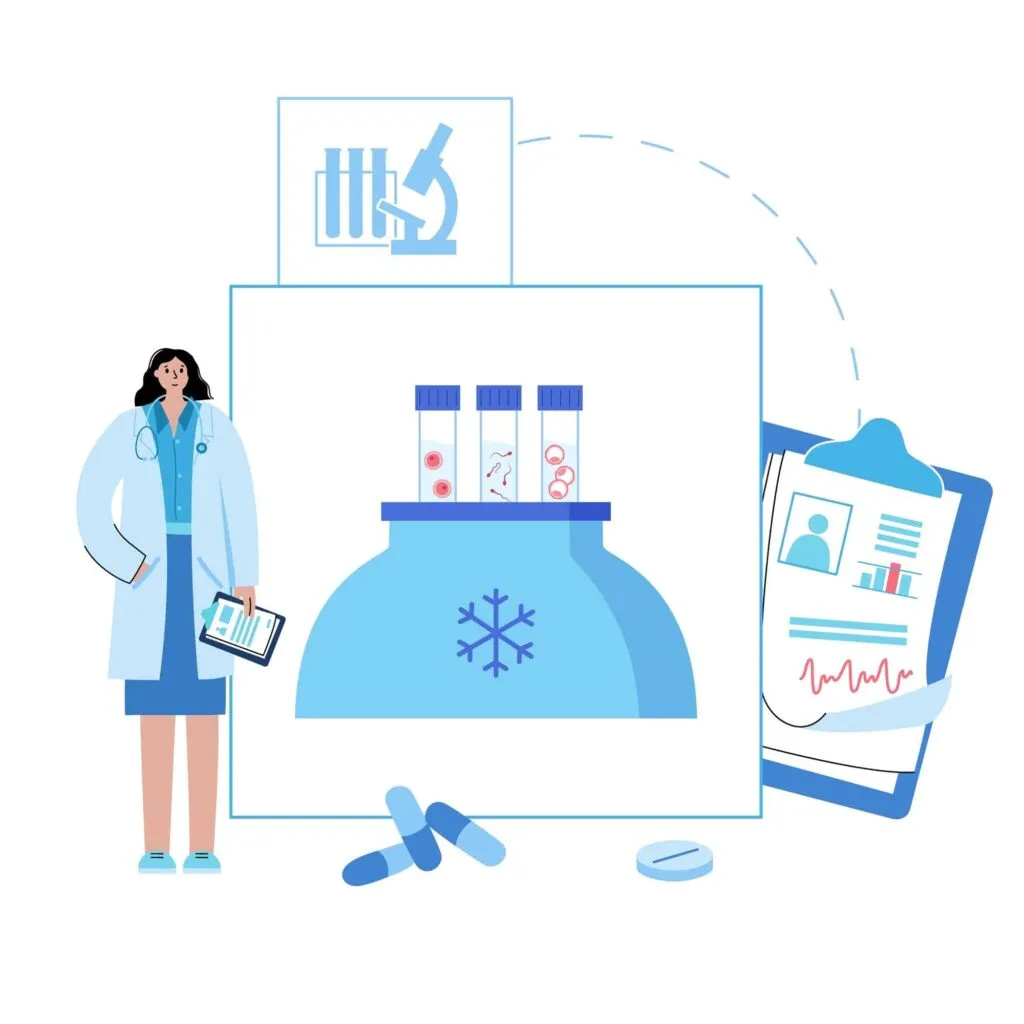
Donor egg IVF is a fertility treatment where eggs from a donor, rather than your own, are fertilised with sperm in a laboratory before the resulting embryo is placed in your womb. It’s usually recommended when a woman’s own eggs are unlikely to result in a pregnancy, whether because of age, ovarian failure, or a genetic condition she doesn’t want to pass on to a future child.
Because donor egg IVF removes egg quality from the equation, success rates tend to be higher and more consistent across age groups than standard IVF using a patient’s own eggs. This guide covers who donor egg IVF is for, how the process works, what it costs, and how to become an egg donor yourself if you’d like to help someone else start a family.
Who Is Donor Egg IVF For?
IVF might be recommended as an alternative to other treatments that have failed, for instance following 12 unsuccessful cycles of intrauterine insemination (IUI). Donor egg IVF specifically tends to be recommended for women who:
Ready to start your project?
Join +450,000 members who find their co-parent or sperm donor
Start free✓ Free ✓ No commitment ✓ Verified
- Have irregular or absent periods due to ovarian failure
- Are experiencing premature ovarian failure, often linked to a genetic condition
- Are over 40 and approaching or going through menopause
- Have had previous IVF cycles fail using their own eggs
- Carry a genetic condition they don’t want to risk passing on to a child
Donor egg IVF is generally not recommended for women over 43, since the chances of becoming pregnant using any method decline significantly at this age, even with a young, healthy donor’s eggs.
How Does Donor Egg IVF Work?
Before treatment starts, you’ll usually undergo tests with your GP or clinic to check your uterus can support a pregnancy, including confirming the tissue isn’t deformed in a way that would prevent an embryo implanting. Once screening is complete, the fertility treatment itself follows a similar structure to standard IVF, just using a donor’s eggs instead of your own.
This process typically has six main stages:
- Your natural menstrual cycle is suppressed using a daily injection or nasal spray
- The donor takes a fertility hormone to increase the number of eggs her ovaries produce
- Ultrasound scans monitor the donor’s egg development, with medication given to help them mature
- The donor’s eggs are collected using a needle
- The collected eggs are fertilised with sperm, a stage that can take a few days
- One or two resulting embryos are transferred into your womb
After the final stage, you’ll need to wait around two weeks before taking a pregnancy test to find out whether the cycle was successful.
Donor Egg IVF Success Rates by Age
One of the main reasons people choose donor egg IVF is that success rates stay consistently higher across age groups than treatment using a patient’s own eggs, since a younger donor’s eggs don’t carry the same age-related decline in quality.
| Treatment type | Typical outcome | Notes |
|---|---|---|
| Own-egg IVF, under 35 | Around 32% pregnancy rate | Best outcomes with a patient’s own eggs |
| Own-egg IVF, 43-44 | Around 5% pregnancy rate | Egg quality and quantity decline sharply |
| Own-egg IVF, 43-50 | Roughly 1 in 20 chance of live birth per transfer | Reflects natural age-related decline |
| Donor egg IVF, all ages | Roughly 1 in 3 chance of live birth per transfer | Consistent because donor eggs are typically from women aged 18-35 |
According to the HFEA, using donor eggs gives around a 1 in 3 chance of a live birth for every embryo transferred across all age groups, compared to roughly 1 in 20 for patients aged 43-50 using their own eggs. This is why donor egg IVF is often recommended once a woman’s own egg reserve has declined too far for her own eggs to give a realistic chance of success.
Beyond age, several other factors affect how well the treatment works, including the number of embryos transferred, the quality of the patient’s uterine lining, the experience of the clinic performing the procedure, and, if known, the underlying cause of the recipient’s infertility. A healthy lifestyle during treatment, including avoiding alcohol and tobacco and cutting back on caffeine, may also help improve your odds.
How Much Does Donor Egg IVF Cost?
The cost of donor egg IVF varies by clinic and depends on your specific fertility circumstances, the number of treatment cycles needed, and whether you require egg donation, sperm donation, or both. A standard IVF cycle in the UK typically costs several thousand pounds, and it usually costs more on top of that once donor compensation and additional screening are included.
According to the NHS, whether you’re eligible for IVF on the NHS at all depends on your age, your local integrated care board’s funding rules, and how long you’ve been trying to conceive, so it’s worth checking with your GP early rather than assuming private treatment is your only option. Some people look into IVF abroad to reduce costs, though the NHS advises thinking carefully about safety and regulation standards before travelling for treatment, since clinics overseas aren’t held to the same rules as UK-licensed clinics.
Who Can Become an Egg Donor?
Women who want to donate their eggs for someone else’s treatment must meet certain criteria:
- Generally aged between 18 and 35 (some clinics accept donors up to 36)
- In good general health, with no untreated hereditary diseases or genetic disorders
- Willing to give written consent, which can be changed or withdrawn at any point up until the eggs are used in treatment
Before donating, women go through a screening process to make sure they’re a safe and suitable match. According to the HFEA, donors have no legal rights or responsibilities towards any children born from their donation once treatment happens at a licensed UK clinic, and they won’t be named on the birth certificate. You can read more about the full egg donor process, including what’s involved in the ovarian stimulation phase and egg collection itself.
What Tests Do Egg Donors Undergo?
Every potential donor is screened thoroughly before being accepted, to protect both the donor’s health and the safety of any child conceived through her donation. Tests usually include:
- Blood tests to determine blood group, blood count and check for existing conditions
- STI screening, including HIV, hepatitis B and C, and syphilis
- Cystic fibrosis and other genetic carrier testing
- A thorough review of the donor’s and her family’s medical history
- Hormone level tests, to check the donor’s eggs are likely to be healthy
- Psychological counselling, to make sure the donor fully understands the implications of donating
How Much Compensation Can an Egg Donor Expect?
In the UK, egg donors can’t be paid for their eggs, but they are compensated up to £985 per cycle for reasonable expenses incurred during the donation process. This is designed to cover financial losses rather than to create a financial incentive to donate. Higher costs, such as accommodation, travel or childcare, can also be claimed where applicable. Donors who aren’t permanent UK residents can also claim expenses, though overseas travel costs generally aren’t reimbursed.
What About Egg Sharing?
Some women undergoing their own fertility treatment, whether artificial insemination or IVF, are offered the chance to donate some of their spare eggs to the clinic as part of an egg-sharing scheme. In exchange, the cost of their own treatment may be reduced. These shared eggs then go towards someone else’s treatment. The eligibility criteria for egg sharers are the same as for standalone egg donors.
Choosing a Clinic for Donor Egg IVF
Not every fertility clinic has the same access to donor eggs, and waiting times can vary considerably depending on demand and the specific characteristics you’re hoping to match, such as ethnicity or physical traits. It’s worth asking any clinic you’re considering how long their current donor egg waiting list is, whether they recruit their own donors or import eggs, and what their published success rates look like for patients in your age group.
Some people choose to bring their own known donor to a clinic rather than rely on the clinic’s waiting list. If a friend or family member is willing to donate, they’ll still need to go through the same medical, genetic and psychological screening as any other donor before treatment can go ahead, and both parties are usually offered counselling to talk through the implications beforehand.
Frequently Asked Questions
How is donor egg IVF different from standard IVF?
The process is almost identical, except the eggs come from a screened donor rather than the patient herself. This tends to make donor egg IVF more successful for older patients or those with reduced egg quality.
Is donor egg IVF recommended for women over 43?
Generally, no. Most UK clinics don’t recommend donor egg IVF, or any IVF treatment, for women over 43, since overall pregnancy chances at this age are considered too low regardless of egg source.
How long does the donor egg IVF process take?
From the donor’s initial screening through to embryo transfer, the process typically takes a few months, including time for hormone stimulation, egg collection, fertilisation and any necessary waiting periods before transfer.
Can I choose my own egg donor for donor egg IVF?
Yes. You can use a donor recruited by your clinic, someone you already know, or in some cases eggs imported from abroad, provided everything is arranged through a UK-licensed clinic.
Does donor egg IVF guarantee a successful pregnancy?
No treatment can guarantee success, but donor egg IVF generally offers higher and more consistent success rates than standard IVF for women with reduced egg quality, particularly those over 40.
If you’re considering donor egg IVF and want to explore your options for finding a donor or a co-parent, join CoParents.co.uk to connect with people who understand every stage of the fertility journey.