
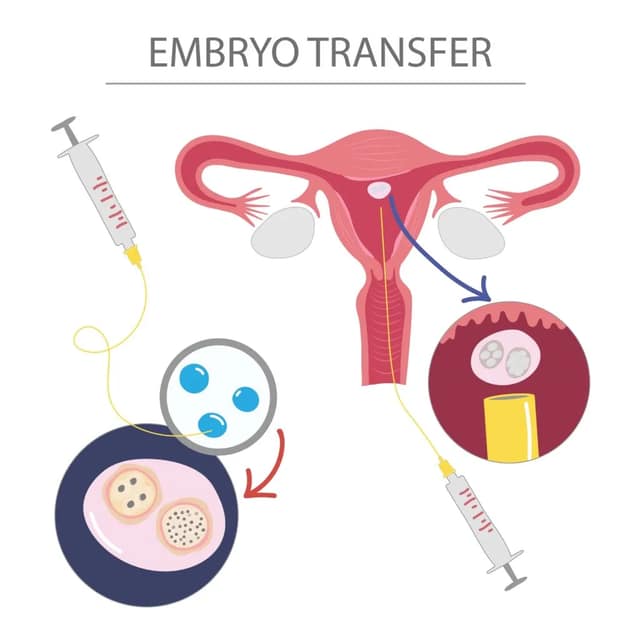
Embryo donation is a form of fertility treatment in which a frozen embryo created by one person or couple is transferred to another person’s uterus to help them achieve a pregnancy. It is one of the least commonly known routes to parenthood in the UK, yet for those who need both egg and sperm donation — or who want to avoid passing on a genetic condition — it can be the most practical and cost-effective option available. This guide covers everything you need to know about embryo donation in the UK in 2026: who it is for, how it works, what it costs, who the legal parents are, and what rights donor-conceived children have.
What Is Embryo Donation?
Embryo donation is the process by which surplus frozen embryos — left over from another person or couple’s IVF treatment — are donated to someone who cannot conceive using their own eggs and sperm. An embryo is an egg that has already been fertilised with sperm in a laboratory, so unlike egg donation or sperm donation alone, embryo donation provides a complete fertilised cell ready for transfer. Neither the egg nor the sperm comes from the recipient.
According to the HFEA’s guide to donating your embryos, around 4,100 children are born each year in the UK with the help of a donor — including sperm, egg and embryo donors. Surplus embryos are created when an IVF cycle produces more embryos than are transferred in the initial cycle. Donors can consent to storing embryos for up to 55 years following a 2022 change in the law, but many choose to donate rather than allow unused embryos to be destroyed.
Ready to start your project?
Join +450,000 members who find their co-parent or sperm donor
Start free✓ Free ✓ No commitment ✓ Verified
Who Can Donate Embryos in the UK?
Anyone who has surplus frozen embryos from a previous IVF cycle can consider embryo donation, provided they meet the eligibility criteria set by the HFEA and the receiving clinic. Key requirements include:
- The egg donor must generally be between 18 and 35 years old and the sperm donor between 18 and 45. Some clinics accept donors outside these ranges in exceptional circumstances.
- Both original donors — the egg and sperm providers — must consent in writing to the donation. Both must agree, and either party can withdraw consent at any time up until the embryo is transferred to the recipient.
- All donors must be screened for infectious diseases including HIV, hepatitis B and C, cytomegalovirus (CMV), chlamydia, gonorrhoea and syphilis, as well as tested for heritable genetic conditions.
- Donation is entirely voluntary and altruistic. Donors are not paid in the UK, though they may receive up to £45 per clinic visit to cover expenses.
If the embryo was created using a sperm donor and a single woman’s eggs — rather than as part of a couple’s treatment — the legal parenthood situation at the point of donation may be more complex. The HFEA advises all parties to seek legal advice before proceeding in these cases.
Who Is Embryo Donation Suitable For?
Embryo donation is particularly suited to those who need both donated eggs and donated sperm. This includes:
- Heterosexual couples where both partners have fertility issues that prevent the use of their own eggs or sperm
- Couples who carry a heritable genetic disorder and want to avoid passing it on to a child
- Post-menopausal women or women who cannot produce viable eggs
- Same-sex male couples using a surrogate who requires a complete embryo
- Single women who cannot use their own eggs and do not wish to source a sperm donor separately
For female same-sex couples, the more common route is reciprocal IVF (shared motherhood), where one partner’s eggs are used. However, if neither partner can produce viable eggs, embryo donation becomes a relevant alternative. For more on all the fertility treatment routes available to same-sex couples, see our guide to LGBTQ+ parenthood and conceiving as a same-sex couple.
How Does Embryo Donation Work in Practice?
The process follows the same clinical steps as a standard frozen embryo transfer (FET). According to the HFEA’s guide to using donated eggs, sperm or embryos in treatment, the key stages are:
- Matching: The clinic matches donated embryos to recipients based on physical characteristics of the original donors — typically including hair colour, eye colour, height, ethnicity and blood type. Occupation, interests and family history may also be considered.
- Recipient preparation: The recipient’s uterus is prepared using hormone medication to make it receptive to the embryo. This typically involves oestrogen to build the uterine lining and progesterone to stabilise it.
- Thawing and transfer: The frozen embryo is thawed and, once quality is confirmed, transferred into the recipient’s uterus via a thin catheter. The procedure is usually straightforward and does not require general anaesthetic.
- Pregnancy test: A blood test is carried out around two weeks after transfer to confirm whether implantation has occurred.
Success rates for frozen embryo transfer in the UK are broadly comparable to fresh IVF cycles. HFEA data shows an average pregnancy rate of 31% per fresh embryo transfer overall, rising to 41% for patients aged 18 to 34. For embryo donation specifically, success rates are often higher than for IVF with the recipient’s own eggs, because the embryos used have already demonstrated quality and development potential during the donors’ original cycle.
Waiting Times and Costs for Embryo Donation in the UK
One of the most significant practical challenges with embryo donation in the UK is availability. Demand significantly exceeds supply. Most licensed clinics have long waiting lists — often one to three years — because relatively few couples with surplus IVF embryos choose to donate rather than store or allow their embryos to perish. This shortage has led some recipients to seek treatment abroad, though HFEA-regulated legal protections do not extend to overseas treatment.
In terms of cost, embryo donation is generally less expensive than a full IVF cycle with donor eggs. A typical embryo donation treatment cycle in the UK costs between £2,000 and £4,000 at a private clinic, excluding medication. NHS funding for embryo donation treatment is available in some areas but is rarely accessible due to strict eligibility criteria. Check with your GP or local integrated care board (ICB) for details specific to your area.
For those who are exploring all fertility options, our guide to IVF treatment and how it works provides a comprehensive overview of the broader IVF process, including the steps involved before any embryo transfer takes place.
Who Are the Legal Parents of a Child Born Through Embryo Donation?
Legal parenthood in this treatment is governed by the Human Fertilisation and Embryology Act 2008 (HFE Act). The rules depend on the recipient’s relationship status at the time of treatment:
- Married or civil-partnered couples: Both partners are automatically the legal parents of any child born through embryo donation at a licensed clinic, regardless of whether they are the genetic parents. Both names can appear on the birth certificate.
- Unmarried couples: The birth parent is automatically the legal mother. For the partner to be recognised as the second legal parent, both must sign the relevant HFEA consent forms before the embryo is transferred. This step is critical — if the forms are not completed before transfer, the partner may not be recognised as a legal parent.
- Same-sex female couples: The same rules apply as for unmarried heterosexual couples. If married or civil partnered, both partners are automatically legal parents. If not, HFEA consent forms must be completed before treatment begins.
- Single recipients: The birth parent is the sole legal parent. The embryo donors have no parental rights or responsibilities.
The embryo donors — the original egg and sperm providers — have no legal rights or responsibilities toward any child born from their donation. They will not be named on the birth certificate and have no say in the child’s upbringing. For a full overview of parental rights across all donor conception routes, see our guide to donor conception, surrogacy, adoption and co-parenting laws in the UK.
What Rights Do Children Born Through Embryo Donation Have?
Like all donor-conceived people in the UK, children born through embryo donation at a licensed clinic have the right to access information about both of their genetic donors — the original egg donor and the original sperm donor:
- From age 16: non-identifying information, including physical description, year and country of birth, ethnicity, medical history, marital status, and any goodwill message written by the donors at the time of donation.
- From age 18: identifying information, including the donors’ full names, dates of birth, and last known addresses — provided both donors registered after 1 April 2005.
Before age 16, if a donor-conceived person is in or considering a sexual relationship, they may request non-identifying information from the HFEA to check for potential genetic relationships. The donors retain the right to be notified before identifying information is released — another reason it is important for donors to keep their contact details with the HFEA up to date.
Parents of children born through embryo donation are encouraged to tell their child about the circumstances of their conception early. Research consistently shows that donor-conceived people who find out about their origins later in life — often through DNA testing services — experience greater difficulty than those who have always known. The HFEA and the Donor Conception Network both provide resources to help parents navigate this conversation.
Embryo Donation vs Other Fertility Routes: a Quick Comparison
| Route | Genetic link to recipient | Typical cost (UK) | Average waiting time |
|---|---|---|---|
| Embryo donation | None | £2,000–£4,000 per cycle | 1–3 years |
| IVF with own eggs | Yes (both partners) | £3,000–£7,000 per cycle | Weeks to months |
| IVF with egg donation only | Sperm only (for partner) | £5,000–£10,000 per cycle | 6–18 months |
| Sperm donation (IUI) | Eggs only | £500–£1,500 per cycle | Weeks to months |
| Reciprocal IVF | Both partners (different roles) | £5,000–£8,000 per cycle | Weeks to months |
For more on egg donation specifically, see our guide to how to become an egg donor in the UK. For sperm donation, see our guide to free sperm donation in the UK.
Frequently Asked Questions About Embryo Donation in the UK
Is embryo donation the same as adoption?
Embryo donation is sometimes called “embryo adoption” informally, but legally it is not the same thing. In adoption, you become the legal parent of a child already born. In embryo donation, the recipient carries and gives birth to the child — making them the birth parent from day one. There is no adoption process involved. The recipient is the legal parent, not an adoptive parent.
Can I choose my embryo donor?
In the UK, recipients do not typically choose specific donors. Clinics match donated embryos to recipients based on physical and other characteristics. This is different from sperm or egg donation in some other countries, where recipients can browse detailed donor profiles. If you want more control over donor selection, your clinic can advise on what matching information is available and whether any choice is possible within their process.
Will my child know they were conceived through embryo donation?
Your child will have the legal right to access identifying information about both of their genetic donors from age 18. The HFEA strongly recommends that parents tell children about their donor-conceived origins early in childhood. This is supported by evidence that earlier disclosure leads to better long-term outcomes for the child and the family. Embryo donation conceived children have access to the same donor information rights as those conceived through sperm or egg donation alone.
What happens to embryos that are not donated?
Embryos that are not donated can be stored for up to 55 years with the consent of both donors, used in the donors’ own future treatment, donated to medical research, or allowed to perish. Many couples find the decision about surplus embryos one of the most emotionally difficult aspects of completing their IVF journey. Embryo donation offers an alternative that allows the embryo to potentially become a child, which many donors find meaningful.
Do embryo donors have any ongoing legal responsibility?
No. Once an embryo is donated through an HFEA-licensed clinic and a child is born, the original egg and sperm donors have no legal rights, no financial responsibilities, and no say in the child’s upbringing. The recipient — or recipients — are the child’s legal parents. This protection applies to both the egg and sperm donors who created the embryo, regardless of their original reasons for undergoing IVF. For more on co-parenting and other routes to parenthood on the platform, visit CoParents.co.uk.
If you are exploring fertility treatment options and want to connect with others on a similar path, CoParents.co.uk has supported over 150,000 people since 2008 in navigating co-parenting, sperm donation and donor conception. Whether you are considering embryo donation or another route entirely, the platform offers a community of people who understand exactly what this journey involves.
Register on CoParents.co.uk today and connect with a supportive community of future parents exploring every route to building a family.