
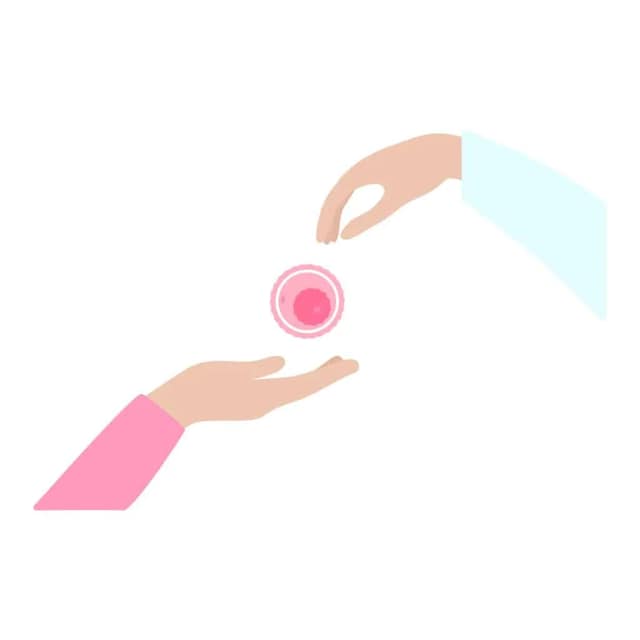
Becoming an egg donor in the UK is one of the most significant acts of generosity a person can make. Every year, around 2,000 to 3,000 people in the UK have a baby thanks to an egg donor — people who could not conceive using their own eggs due to cancer treatment, early menopause, genetic conditions, or age-related fertility decline. According to HFEA data, around 1 in 153 of all children now born in the UK are conceived through donated eggs, sperm or embryos. If you are considering donation, or want to understand how the process works before making any decision, this guide explains everything from eligibility and the medical procedure to compensation and the legal rights of donor-conceived children.
Who Needs an Egg Donor?
There are several situations in which someone may need an egg donor to have a child. The most common include women who have gone through premature ovarian insufficiency or early menopause, those who have undergone chemotherapy or radiotherapy which has affected their egg supply, and women who carry a heritable genetic condition they do not want to pass on to a child. Post-menopausal women who wish to experience pregnancy can also conceive using a donated egg.
Gay male couples who are pursuing surrogacy also need an egg donor, as their surrogate requires a donor egg to be fertilised with one partner’s sperm. Reciprocal IVF, used by female same-sex couples, involves one partner donating eggs to the other — a form of known egg donation within the relationship. For more on all the routes available to LGBTQ+ parents, see our guide to LGBTQ+ parenthood and conceiving as a same-sex couple.
Ready to start your project?
Join +450,000 members who find their co-parent or sperm donor
Start free✓ Free ✓ No commitment ✓ Verified
Who Can Become an Egg Donor in the UK?
To become an egg donor in the UK, you must meet the eligibility requirements set by the Human Fertilisation and Embryology Authority (HFEA). According to the HFEA’s guide to donating your eggs, the main criteria are:
- You are generally between 18 and 35 years old. Some clinics accept donors up to 36, and exceptions may be made for directed donation to a family member.
- You are fit and in good general health.
- You do not have any hereditary diseases or genetic disorders that could be passed on to a child.
- You do not have any serious medical conditions that could be worsened by the egg donation process.
- Some clinics require a BMI below 30, though this varies between providers.
You do not need to have had your own children to become an egg donor, though around one in three UK egg donors already have a child of their own. The HFEA data shows that UK egg donors are largely motivated by altruism — a desire to help others build families — rather than financial gain. For details on fertility clinic costs and what the process involves for recipients, see our guide to fertility clinic costs in the UK.
How to Become an Egg Donor: the Step-by-Step Process
The process of becoming an egg donor in the UK involves several distinct stages, from initial application through to egg collection. Here is what to expect:
Step 1: Find a licensed fertility clinic
Your first step is to find an HFEA-licensed fertility clinic that recruits egg donors. You can search the HFEA clinic database by postcode, filtering specifically for clinics that are actively recruiting donors. If you are considering donating to someone you know — a friend, family member, or someone you have connected with — make sure the clinic you select accepts directed or known donations, as not all do.
Step 2: Complete an application and initial consultation
You will complete a detailed application form covering your personal information, medical history, and lifestyle. You will then be invited to an appointment with the donation team, who will explain the process in full. All prospective donors are offered counselling with a specialist fertility counsellor to discuss the emotional implications of donation — for yourself, your partner if you have one, and any children born as a result.
Step 3: Screening and tests
Before you can donate, you must undergo a range of medical screening tests. These include blood tests and a transvaginal ultrasound scan to assess your ovarian reserve — the quantity and quality of eggs available for donation. You will also be screened for infectious diseases including HIV, hepatitis B and C, chlamydia, gonorrhoea and syphilis, and for heritable genetic conditions. You will need to provide a detailed family medical history going back at least two generations. Once screening is complete and you are confirmed as a suitable donor, you will sign the HFEA consent forms. You can withdraw your consent at any point up until the moment your eggs are used.
Step 4: Ovarian stimulation
The medical procedure is similar to the early stages of IVF. You will be given medication to suppress your natural hormone production, followed by daily hormone injections to stimulate your ovaries to produce multiple mature eggs. This ovarian stimulation phase lasts approximately 10 to 14 days. During this time, you will attend the clinic for regular ultrasound scans and blood tests to monitor your response to the medication. When your eggs have reached the right size, you will be given a trigger injection of human chorionic gonadotrophin (hCG) to trigger final maturation.
Step 5: Egg collection
Egg collection takes place 34 to 38 hours after the trigger injection. The procedure is carried out under sedation at the clinic and typically takes 20 to 30 minutes. A thin needle is passed through the vaginal wall, guided by ultrasound, to retrieve the mature eggs from the follicles. You can generally go home a few hours after the procedure. Most donors experience some mild discomfort and bloating afterwards, and it is advisable to rest for one to two days. The entire process from initial contact to egg collection usually takes two to three months.
How Much Are Egg Donors Paid in the UK?
Buying or selling eggs is illegal in the UK. Egg donor compensation is strictly altruistic. However, because egg donation is time-consuming and physically demanding, the HFEA permits donors to receive £985 per donation cycle to cover expenses such as travel, accommodation, childcare and loss of earnings. This figure was increased from £750 in October 2024 — the first review since 2011 — to reflect the rise in the cost of living.
If you are not a permanent UK resident, you may be eligible for the same compensation, but overseas travel expenses are not covered. Some donors may claim additional documented expenses beyond £985 if costs genuinely exceed this amount, subject to the clinic’s approval. According to the HFEA’s egg donation factsheet, academic research consistently shows that UK egg donors are motivated primarily by altruism rather than financial incentive.
Does an Egg Donor Have Any Legal Rights or Responsibilities?
When you donate eggs through an HFEA-licensed clinic, you have no legal rights or responsibilities toward any child born from your donation. You will not be named on the birth certificate, you have no parental rights, and you cannot be pursued for financial support. The intended parents — or parent — are the legal parents of the child.
However, there is one important long-term implication every donor should fully understand before proceeding: children conceived using your eggs have the right to request your identifying information once they turn 18. They can ask the HFEA for your full name, date of birth, place of birth and last known address. You will be notified before this information is released, which is why it is important to keep your contact details with the HFEA up to date. For a broader overview of donor conception law in the UK, see our comprehensive guide to donor conception, surrogacy, adoption and co-parenting laws.
From age 16, a donor-conceived person can also request non-identifying information about their egg donor, including physical description, ethnicity, medical history, and any goodwill message you choose to write at the time of donation.
Egg Donor Risks and Considerations
The egg donation process is generally safe, but it is a medical procedure and carries some risks. The most significant is ovarian hyperstimulation syndrome (OHSS), a condition where the ovaries overreact to the stimulation medication. Mild OHSS is relatively common; severe OHSS, which may require hospitalisation, is rare. Your clinic will monitor you closely throughout the stimulation phase to detect any early signs. Every prospective donor should discuss these risks in full with the clinic team and with the counsellor before proceeding.
You should also think carefully about the longer-term emotional implications. You may, at some point in the future, be contacted by a donor-conceived person who is genetically your child. Some donors find this prospect manageable or even welcome; others find it more complex. The counselling session offered at the start of the process is specifically designed to help you think through these questions before you commit.
Egg Donor Summary: Key Facts at a Glance
| Criteria | Detail |
|---|---|
| Age requirement | 18 to 35 (some clinics to 36) |
| Compensation per cycle | Up to £985 (from October 2024) |
| Duration of process | 2 to 3 months from initial contact to egg collection |
| Stimulation phase | 10 to 14 days of daily injections |
| Egg collection duration | 20 to 30 minutes under sedation |
| Legal parental status | None — donor has no parental rights or obligations |
| Anonymity | Not permitted — donor-conceived people can access identifying information at 18 |
| Maximum families helped | 10 (same 10-family limit as sperm donors) |
Frequently Asked Questions About Egg Donation in the UK
Can I become an egg donor if I have not had children?
Yes. There is no requirement to have had your own children to become an egg donor in the UK. However, counselling at the outset will explore how you might feel in the future about having genetic children you are not raising — a consideration that carries different weight for people who have and have not yet had children of their own.
Can I choose who receives my eggs?
In most cases, donors donating through a clinic do not choose their recipient. Clinics match donors to recipients based on physical characteristics such as height, eye colour, hair colour, ethnicity and blood type. However, if you are donating to someone you already know — a directed or known donation — you can specify who receives your eggs, provided the clinic accepts this arrangement and all parties complete the required consent forms.
How many families can I help as an egg donor?
Under UK law, a donor can help create a maximum of 10 families. This limit applies to the number of families — not the number of children — born from your donations. If you donate multiple times, all donations are tracked by the HFEA to ensure the 10-family limit is not exceeded across different clinics.
What happens if a donor-conceived person contacts me?
Contact is initiated by the donor-conceived person, not the donor. Once they turn 18, they can request your identifying information from the HFEA. You will be notified before the information is shared. Whether you choose to respond, meet, or build any kind of relationship is entirely your decision — there is no legal obligation to do so. The HFEA and the Donor Conception Network both offer support and counselling to donors navigating this possibility. For related context, see our guide to sperm donor contact in the UK, which covers the same rights and processes from the donor’s perspective.
What is egg sharing and how does it differ from egg donation?
Egg sharing is a scheme where a woman undergoing her own IVF treatment donates a portion of the eggs she produces to another patient, in exchange for a reduction in her own treatment costs. It is a form of egg donation, but the motivation differs — the donor is also a fertility patient. Standard egg donor arrangements involve people who are not undergoing IVF themselves and donate purely to help others. Both arrangements are regulated by the HFEA and must take place at a licensed clinic. For more on IVF and how it connects to egg donation treatment, see our guide to IVF treatment and how it works.
Becoming an egg donor is a profound act that gives people the chance to have families they could not otherwise build. If you are considering it, start by speaking to an HFEA-licensed clinic and make use of the counselling that is offered. You can also connect with people who are looking for known egg donors or co-parents through CoParents.co.uk. Over 150,000 people have been building families since 2008.
Register on CoParents.co.uk today and join a community of people navigating every route to parenthood.