
Your Complete Guide to Lesbian IVF in the UK: Costs, Success Rates and Legal Rights

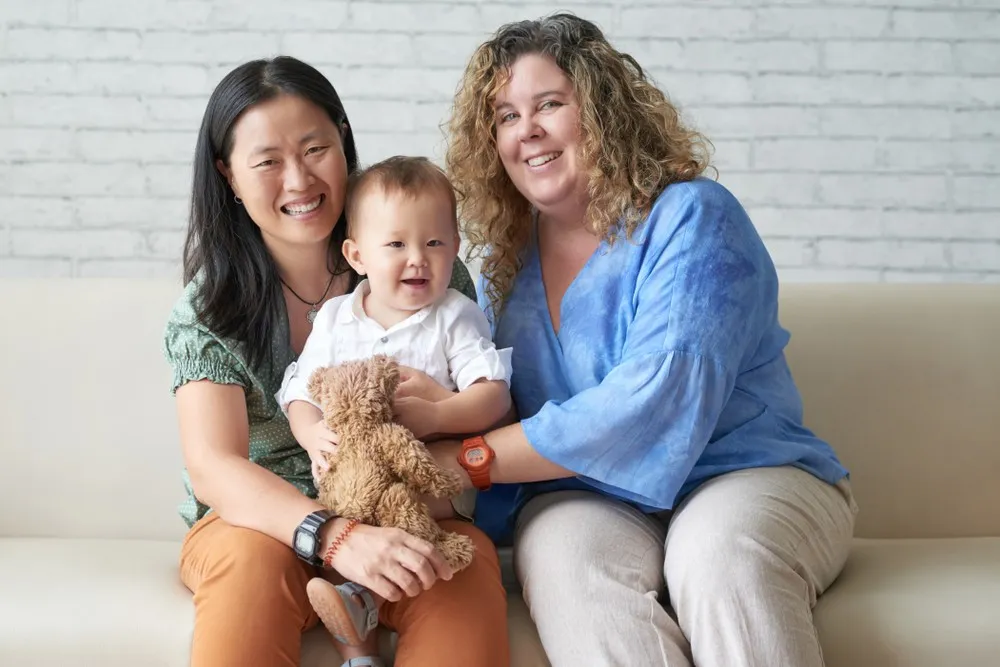
Lesbian IVF is the most effective fertility treatment available to same-sex female couples in the UK, with HFEA data showing that female same-sex patients achieve a birth rate per embryo transferred of 40% or higher — the best of any patient group. Whether you are considering standard IVF with donor sperm or reciprocal IVF (shared motherhood), understanding the process, costs, legal framework and NHS access criteria will help you make confident decisions on your path to parenthood.
The number of female same-sex couples accessing IVF in the UK has grown significantly over the past decade. Between 2012 and 2022, the number of female same-sex patients having IVF or donor insemination rose from around 1,300 to 3,300 per year. More lesbian couples are now choosing IVF over donor insemination as a first-line treatment, partly because IVF offers higher success rates per cycle, a shorter time to pregnancy, and the possibility of storing embryos for future siblings.
What Is Lesbian IVF and How Does It Work?
Lesbian IVF follows the same clinical protocol as standard in vitro fertilisation. Eggs are retrieved from one partner’s ovaries after a course of hormone stimulation, then fertilised with donor sperm in a laboratory. The resulting embryo is transferred into the uterus, where implantation and pregnancy can occur. The entire cycle typically takes 4 to 6 weeks from the start of medication to embryo transfer.
Before treatment begins, the partner providing eggs undergoes blood tests, ultrasound scans and screening for infectious diseases. She then takes injectable fertility medications for approximately 10 to 14 days to stimulate the ovaries into producing multiple eggs. Egg retrieval is a minor procedure performed under sedation, lasting around 15 to 20 minutes. Once fertilised, embryos develop in the laboratory for 3 to 5 days before the strongest one is selected for transfer.
For lesbian couples, the key additional step is selecting a sperm donor. You can use an HFEA-licensed sperm bank, where all donors are screened for infectious diseases, genetic conditions and sperm quality. Sperm is quarantined for 180 days and retested before use. Since 2005, donor-conceived children in the UK can access their donor’s identifying information when they turn 18. Alternatively, platforms like CoParents.co.uk, a co-parenting and sperm donation network with over 150,000 users since 2008, connect prospective parents with known donors who provide detailed health histories and personal profiles.
How Does Lesbian IVF Compare to IUI?
Intrauterine insemination (IUI) is often the first treatment lesbian couples try, but it has lower success rates than IVF. IUI places washed sperm directly into the uterus and achieves pregnancy in roughly 12 to 15% of cycles. IVF, by contrast, achieves a national average birth rate of around 31% per fresh embryo transfer, rising to 41% for patients aged 18 to 34. For couples who have tried several unsuccessful IUI cycles, lesbian IVF is usually the recommended next step.
Cost is one reason many couples start with IUI. A single IUI cycle typically costs £800 to £1,500, while a standard IVF cycle ranges from £5,000 to £8,000. However, because IVF has a higher success rate per cycle, the total cost to achieve pregnancy can be comparable or even lower when multiple IUI cycles are needed. The HFEA has noted a clear shift: since 2021, more female same-sex couples and single patients are choosing IVF as their primary treatment rather than starting with donor insemination.
What Is Reciprocal IVF for Lesbian Couples?
Reciprocal IVF, also known as shared motherhood or co-IVF, is a popular lesbian IVF technique designed specifically for female same-sex couples. One partner provides the eggs, which are fertilised with donor sperm in a laboratory. The resulting embryo is then transferred into the other partner’s uterus, who carries the pregnancy and gives birth. This means one woman is the genetic mother and the other is the birth mother, giving both a direct biological connection to the child.
The process requires both partners to undergo medical assessments. The egg-providing partner takes hormone stimulation medication and undergoes egg retrieval, just as in standard IVF. The partner who will carry the pregnancy takes medications to prepare the uterine lining for implantation, and the two cycles are synchronised so the embryo can be transferred at the optimal time. Reciprocal IVF does not carry additional medical risk compared to standard IVF, and costs are similar at around £5,000 to £8,000 per cycle.
Many lesbian couples choose reciprocal IVF because it allows both partners to participate physically in creating their family. It is increasingly popular in the UK and is offered at most HFEA-licensed clinics. If you are deciding which partner will conceive, factors such as age, fertility health, medical history and personal preference all play a role in the decision.
Can Lesbian Couples Get IVF on the NHS?
Access to NHS-funded lesbian IVF depends largely on where you live. NICE guidelines recommend that women under 43 should be offered IVF after demonstrating they cannot conceive through less intensive methods. For female same-sex couples, most Integrated Care Boards (ICBs) in England require 6 to 12 self-funded IUI cycles before you can access the NHS fertility treatment pathway. According to GOV.UK data, some ICBs require up to 12 rounds of self-funded artificial insemination, which can cost up to £25,000 before NHS funding becomes available.
This requirement does not apply to heterosexual couples, who qualify for NHS IVF after two years of unsuccessful unprotected sex at no additional cost. Only 16% of female same-sex couples received NHS funding for their first IVF treatment, compared to 52% of opposite-sex couples aged 18 to 39. The disparity is narrower in Scotland, where up to 6 IUI cycles are funded for all couples, and 40% of IVF cycles for female same-sex couples receive NHS funding.
The UK Government’s 2022 Women’s Health Strategy pledged to remove these additional financial barriers, but as of 2025, only a handful of ICBs have implemented changes. If your local ICB does not offer equitable access, private IVF remains the main alternative. Age limits generally require the patient to be between 23 and 42, with a healthy BMI and no active smoking.
How Should You Choose a Sperm Donor for Lesbian IVF?
Choosing the right sperm donor is one of the most important decisions in the lesbian IVF process. You and your partner need to decide between a known donor and an anonymous donor from a sperm bank. Each option has distinct legal, emotional and practical implications.
With an HFEA-licensed sperm bank, all donors are rigorously screened for infectious diseases, genetic conditions and sperm quality. Sperm is quarantined and retested, and you can select a donor based on characteristics such as physical appearance, education and family medical history. A single vial typically costs £500 to £1,200, plus clinic fees. The donor has no legal parental rights or responsibilities when treatment takes place at a licensed clinic.
A known donor — whether a friend, family member or someone found through an online platform — offers the advantage of transparency and a potential ongoing relationship with the child. However, if conception takes place outside an HFEA-licensed clinic, the donor may have legal parental rights. For this reason, the HFEA strongly recommends that lesbian couples use a licensed clinic for donor insemination, especially if you want both partners to be recognised as legal parents from birth.
What Are the Legal Rights of Lesbian Couples After IVF?
UK law provides clear protections for lesbian couples who conceive through IVF at an HFEA-licensed clinic. If you are married or in a civil partnership at the time of treatment, both partners are automatically recognised as the child’s legal parents. If you are not married, both partners can still be legal parents provided treatment takes place at a licensed clinic and the correct consent forms are signed before conception.
If conception occurs outside a licensed clinic — for example, through home insemination — only the birth mother is the legal parent. The non-birth mother would need to apply for a step-parent adoption or a parental responsibility order to gain legal parental status. The sperm donor, in this case, could be considered the legal father unless specific legal agreements are in place. This is one of the strongest arguments for choosing lesbian IVF at a licensed clinic, where legal parentage is established automatically. Understanding these legal distinctions is essential when planning lesbian IVF treatment.
Under the Human Fertilisation and Embryology Act 2008, donor-conceived children have the right to access identifying information about their donor when they turn 18. This applies to all donations made through HFEA-licensed clinics since 2005.
What Are the Success Rates of Lesbian IVF in the UK?
Lesbian IVF success rates in the UK are among the highest of any patient group. HFEA data shows that female same-sex couples achieve a birth rate per embryo transferred of 40% or above, compared to 35% among opposite-sex couples. This higher rate is partly because lesbian IVF patients tend to be younger and do not have underlying fertility conditions — they are using IVF because they need donor sperm, not because of medical infertility.
Age remains the single most important factor affecting success. For patients aged 18 to 34, IVF achieves a birth rate of around 41% per fresh embryo transfer. Success rates decline gradually after 35, dropping to approximately 20% for women aged 38 to 39, and below 10% for women over 42. If your first cycle does not succeed, frozen embryos from the same cycle can be used in subsequent transfers without repeating the full stimulation and retrieval process, which reduces both cost and physical strain.
How Can You Prepare for Lesbian IVF Treatment?
Good preparation improves your chances of a successful lesbian IVF cycle. Both partners should visit their GP for a general health check. The partner providing eggs should have blood tests to assess ovarian reserve (AMH levels) and a pelvic ultrasound to check for conditions such as endometriosis or polycystic ovaries. Lifestyle factors matter too: maintaining a healthy BMI, stopping smoking, limiting alcohol and taking folic acid (400 micrograms daily) are all recommended by the NHS when trying to conceive.
Emotional preparation is equally important. IVF can be physically demanding and emotionally intense, particularly if the first cycle is not successful. Many clinics offer counselling as part of the treatment package, and LGBTQ+ organisations like Stonewall provide support groups and resources specifically for same-sex couples navigating fertility treatment. Open communication between partners — about expectations, timelines, finances and the emotional ups and downs — is one of the most important foundations for a positive experience.
Frequently Asked Questions About Lesbian IVF
How much does lesbian IVF cost in the UK?
A single cycle of lesbian IVF typically costs between £5,000 and £8,000 at a private clinic, including medication, egg retrieval, laboratory fees and embryo transfer. Donor sperm adds £500 to £1,200 per vial. Additional costs may include initial consultations (£200 to £500), blood tests and embryo freezing (£500 to £1,000 per year for storage). Reciprocal IVF costs are similar to standard IVF.
Can both partners in a lesbian couple be biological parents through IVF?
Yes — through reciprocal IVF, one partner provides the eggs and the other carries the pregnancy, giving both a biological connection to the child. However, only the egg-providing partner is genetically related. It is not currently possible for both partners to be the genetic mother of the same child.
How many IVF cycles does it usually take for lesbian couples to get pregnant?
Many lesbian couples undergoing lesbian IVF conceive within 1 to 3 cycles. With a birth rate of around 40% per embryo transferred for female same-sex patients, the cumulative chance of success increases significantly with each additional cycle. Most clinics recommend trying up to 3 fresh cycles before considering alternative approaches.
Is lesbian IVF covered by private health insurance in the UK?
Some private health insurers, such as Bupa, offer fertility coverage that may include IVF. Coverage varies widely between policies and providers. Most private insurance plans exclude fertility treatment, so it is important to check your specific policy before starting treatment.
Where can I find a sperm donor for lesbian IVF?
You can find a sperm donor through an HFEA-licensed sperm bank, a fertility clinic, or an online platform like CoParents.co.uk. Licensed sperm banks offer the highest level of screening and legal protection. Online platforms provide more personal connection and transparency about the donor’s background and motivations.
Ready to take the first step toward building your family? Join CoParents.co.uk for free to connect with sperm donors and co-parents who share your vision of parenthood, and start your journey to becoming a mum.


Responses