
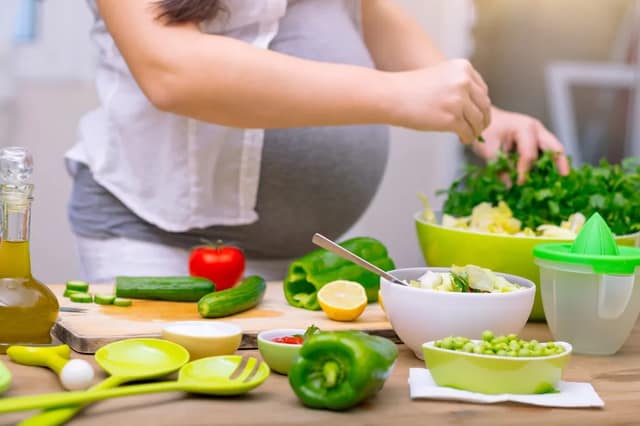
Pregnancy food choices matter more than most people expect, not because you need to eat differently overall, but because a small number of foods carry a real risk of bacteria such as listeria, toxoplasma and salmonella. These can lead to miscarriage, preterm delivery or a seriously unwell newborn. Getting your pregnancy food choices right is mostly a matter of a few simple swaps and cooking habits, not a total overhaul of your diet. This guide covers what to eat, what to limit, and the eleven food categories worth treating with extra care throughout pregnancy.
What Counts as Good Pregnancy Food?
Most of what makes up healthy, balanced pregnancy food is exactly what you would eat any other time: plenty of fruit and vegetables, whole grains, lean protein, and dairy for calcium. According to the NHS, you do not need to “eat for two”, even with twins, and most foods and drinks remain perfectly safe throughout pregnancy.
Iron-rich foods such as red meat, beans and leafy greens help prevent anaemia, while calcium from prenatal vitamins and pasteurised dairy supports your baby’s developing bones. Oily fish like salmon, eaten within the recommended limits, is one of the best natural sources of omega-3 for fetal development.
Ready to start your project?
Join +450,000 members who find their co-parent or sperm donor
Start free✓ Free ✓ No commitment ✓ Verified
Folic acid and vitamin D deserve a special mention. The NHS recommends 400 micrograms of folic acid daily from before conception until at least week 12, alongside 10 micrograms of vitamin D throughout pregnancy. Neither is difficult to get right, but both make a genuine difference to how your pregnancy food choices support early development.
Why Some Pregnancy Food Choices Carry Extra Risk
A handful of foods are singled out for a reason: they are more likely to carry listeria, toxoplasma or salmonella, all of which behave differently in pregnancy than in everyday life. Listeria in particular can cross the placenta even when it causes only mild symptoms in the mother, which is why it is treated with more caution than most other food bacteria.
The Food Standards Agency notes that cooking food to the right temperature kills these bacteria reliably, which is why so much of pregnancy food advice comes down to how something is cooked or stored rather than banning it outright.
Foods to Avoid During Pregnancy: A Category-by-Category Guide
- Raw or undercooked meat. Beef, pork, lamb and poultry can carry toxoplasma and salmonella when rare or undercooked. Cook meat until it is steaming hot with no trace of pink, and there should be no risk.
- Cold cured and lunch meats. Ham, salami, chorizo and pre-packaged sandwich meats can contain listeria. Reheat cold meats until steaming, or choose tinned versions, which are considered safe.
- Certain fish. Shark, swordfish and marlin contain high mercury levels that can affect a baby’s developing nervous system, so these should be avoided completely rather than just limited.
- Tuna and oily fish. These are safe in limited amounts. Stick to no more than four cans, or two tuna steaks, a week, and no more than two portions a week of oily fish such as salmon, trout or mackerel.
- Sushi. Sushi made with cooked fish or cooked shellfish is fine. Raw fish sushi should be avoided, even if it has been previously frozen.
- Raw or undercooked seafood. Oysters, scallops and mussels served raw carry a real risk of food poisoning. Cook shellfish until the shells open and the flesh is opaque and firm.
- Raw or undercooked eggs. Eggs with the British Lion stamp can be eaten runny or raw. Eggs without it, and dishes made with raw egg like homemade mayonnaise, should be fully cooked or avoided.
- Unpasteurised and mould-ripened soft cheeses. Brie, camembert, chèvre and blue-veined cheeses may carry listeria unless cooked until steaming hot. Hard cheeses such as cheddar and parmesan are safe.
- Unpasteurised milk and dairy. Unpasteurised milk, cream and ice cream can carry listeria. Almost everything sold in UK shops is pasteurised, but it is worth checking the label if you are unsure.
- Unwashed fruit and vegetables. Soil on unwashed produce can carry toxoplasma. A thorough wash under running water removes the risk without needing to avoid these foods.
- Alcohol and high caffeine intake. Alcohol passes to your baby through the placenta and has no known safe level in pregnancy, while caffeine should be kept under 200mg a day.
| Drink or food | Approximate caffeine content |
|---|---|
| Instant coffee (1 cup) | 100mg |
| Tea (1 cup) | 75mg |
| Energy drink (250ml) | 80mg |
| Cola (1 can) | 40mg |
| Plain dark chocolate (50g) | Under 25mg |
Staying under 200mg of caffeine a day, roughly two cups of instant coffee, is the safest approach throughout pregnancy, since higher intakes have been linked to a greater chance of miscarriage.
Pregnancy Food Priorities by Trimester
Pregnancy food needs shift gradually as pregnancy progresses, even though the core safety rules stay the same throughout. In the first trimester, folic acid is the priority, and nausea often makes small, frequent meals easier to manage than three large ones.
By the second trimester, appetite usually picks up, and iron and calcium become more important as your blood volume increases and your baby’s bones develop. The third trimester brings higher energy needs and, for many people, less room for large meals, so fibre-rich carbohydrates and smaller portions spread across the day tend to work better than heavier meals eaten less often.
Pregnancy Food Cravings and Aversions
Strong cravings and sudden food aversions are extremely common and rarely mean anything is wrong. Many people find that foods they once loved, particularly meat, eggs or coffee, suddenly feel unappealing during the first trimester, while cravings for specific textures or flavours can appear just as quickly. Neither pattern is fully understood, though hormonal changes and a heightened sense of smell are thought to play a role.
Unusual cravings for non-food items, such as ice, chalk or soil, are known as pica and are worth mentioning to your midwife, since they can sometimes point to an iron deficiency. Ordinary cravings for chocolate, cheese or salty snacks need no special action beyond keeping portions sensible and staying within the caffeine and alcohol limits already covered above.
Pregnancy Food Safety Tips for Cooking and Storage
Good hygiene habits reduce risk far more than avoiding entire food groups. Always wash your hands before preparing food, keep raw meat separate from other ingredients, and refrigerate leftovers within two hours of cooking. If you are unsure whether something is cooked through, the safest test is steam rising from the middle when it is cut open.
Fridge temperature matters more than people realise: keeping your fridge at or below 5°C slows the growth of listeria significantly, which is one of the simplest and most effective pregnancy food safety habits you can adopt. Eat chilled ready-to-eat foods, such as pre-packaged sandwiches, before their use-by date, and reheat leftovers only once.
Weight gain is a related concern many people ask about alongside diet. Our guide to pregnancy weight gain covers healthy ranges by starting BMI, so you can eat well without worrying unnecessarily about the scales.
Pregnancy Food Myths You Can Stop Worrying About
Several common pregnancy food fears are more cautious than necessary. Peanuts are safe unless you have an allergy or have been told otherwise by a doctor. Canned light tuna, eaten within the weekly limit, poses no real risk. Cheese made from pasteurised milk, including soft varieties like mozzarella and cream cheese, is also perfectly safe.
If you have experienced pregnancy loss before, listeria and toxoplasma exposure is sometimes raised as a worry for a future pregnancy. Our article on recovering and conceiving after a miscarriage covers what additional monitoring, if any, is usually offered. If you are also working on your fertility before conceiving, many of the same food safety habits are worth starting early.
Frequently Asked Questions About Pregnancy Food
Can I eat soft cheese if it’s been cooked?
Yes. Soft, mould-ripened or blue cheeses are safe once cooked until steaming hot all the way through, which kills any listeria bacteria present.
Is it safe to eat sushi during pregnancy?
Sushi made with cooked fish or cooked shellfish is safe. Sushi made with raw fish should be avoided, even if the fish was previously frozen.
How much caffeine can I have during pregnancy?
No more than 200mg a day, which is roughly two cups of instant coffee. This includes caffeine in tea, cola, energy drinks and chocolate.
What happens if I accidentally eat something I shouldn’t have?
A single small amount of a food you should avoid is unlikely to affect your baby if you do not become unwell afterwards. Contact your midwife or GP if you feel ill or have any concerns.
Are prenatal vitamins a substitute for good pregnancy food?
No. Prenatal vitamins fill specific gaps, such as folic acid and vitamin D, but they work alongside a balanced diet rather than replacing one.
Why do I suddenly dislike foods I used to enjoy?
Food aversions are common in early pregnancy and are usually linked to hormonal changes and a stronger sense of smell. They typically ease after the first trimester.
Getting pregnancy food right is less about restriction and more about a handful of simple swaps: cook meat and eggs thoroughly, choose pasteurised dairy, wash your fruit and vegetables, and keep an eye on caffeine. Once those habits are in place, the vast majority of your usual diet remains exactly as it was.
If you are planning a pregnancy without a partner and want to connect with people who understand the journey, CoParents.co.uk brings together future parents, known sperm donors and co-parents in a supportive, verified community. Join CoParents.co.uk today to start building your parenting project.