
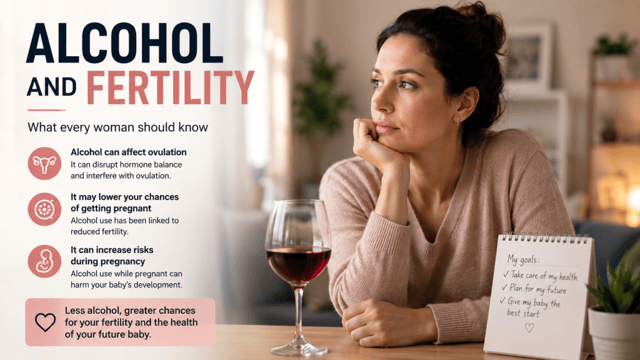
Alcohol and fertility are closely linked: drinking can lower your chances of conceiving and harm a baby in the earliest, often unnoticed weeks of pregnancy. If you are trying to become a mum, the safest approach is to stop drinking from the moment you come off contraception.
You have certainly heard warnings about alcohol during pregnancy. You probably know it can permanently damage a developing fetus. However, what many people do not realise is that the relationship between alcohol and fertility matters well before a positive test. Here is what you should know before you start trying to conceive.
Why Does Alcohol and Fertility Matter Before Pregnancy?
The risk with drinking while trying to conceive is that you may become pregnant without realising it. In fact, most women only discover they are expecting once they are already 4 to 6 weeks along. Therefore, future mothers often keep drinking during this window, unknowingly exposing an unborn child to alcohol.
Ready to start your project?
Join +450,000 members who find their co-parent or sperm donor
Start free✓ Free ✓ No commitment ✓ Verified
Indeed, fetal development is rapid during the first few weeks. Alcohol can significantly affect the baby’s growth during these critical early stages. Moreover, it can increase the risk of miscarriage and stillbirth.
If you decide to try for a baby, you should stop drinking from the moment you stop your birth control, whatever method you use (the pill, IUD, IUS, diaphragm, implant or patch). If you have already been drinking in the first weeks without knowing you were pregnant, stop immediately and tell your doctor honestly. According to NHS guidance on planning your pregnancy, you should not drink alcohol if you are pregnant or trying to get pregnant, as it passes to your unborn baby.
Alcohol and Fertility: The Science of Conception
The connection between alcohol and fertility affects both partners, so anyone researching this topic should know the impact is not limited to women. Research summarised by the NHS shows that heavy drinking can disrupt ovulation and menstrual cycles in women, while in men it can reduce sperm quality, count and motility. By contrast, reducing intake can measurably improve reproductive health within a few months.
For couples using a clinic, this matters even more. The HFEA notes that lifestyle factors influence treatment outcomes, so cutting alcohol before IUI or IVF is widely advised. This applies equally whether you conceive with a partner, through a clinic, or with a known donor.
What Is Fetal Alcohol Syndrome?
When you are pregnant, you must be extra careful about what you eat and drink. Anything you digest may feed the fetus. The alcohol you ingest crosses the placenta and enters your baby’s bloodstream.
Drinking during pregnancy can cause fetal alcohol syndrome, a group of disorders affecting development and provoking neural, physical and behavioural problems. Linked conditions include learning difficulties, abnormal appearance, low body weight, a small head and eyes, poor coordination, a weak immune system, and epilepsy. The NHS confirms this risk of fetal alcohol spectrum disorder. The condition cannot be cured and can affect a child for life. Furthermore, effects are often detected only years later, for instance when the child starts school.
Is There a Safe Amount of Alcohol When Trying to Conceive?
No. There is no known safe level of alcohol during pregnancy or while trying to conceive. Beers, wines, cocktails and every other kind of alcohol can seriously affect your baby’s development and cause fetal alcohol disorders.
For this reason, UK health bodies recommend abstaining completely, even from the smallest amount. When it comes to alcohol and fertility, abstinence is the only guaranteed safe choice once you are actively trying.
What Are the Alternatives to Drinking?
If you find it genuinely hard to stop, some experts suggest a glass or two only during the first half of the cycle, before ovulation. However, you should not drink at all in the second half, after ovulation, since this is when conception can occur. To avoid any unnecessary risk, discuss this with your doctor first.
By the way, after stopping birth control, your periods may be irregular at first. It can take three months or more for the natural cycle to return to normal. So extra caution is wise if you choose to drink a little during this time.
Whether you would rather toast your sister’s birthday with orange juice or simply enjoy a relaxing drink after work, plenty of delicious non-alcoholic options exist. Give a virgin strawberry daiquiri a try, or experiment with sparkling water and fresh fruit.
Frequently Asked Questions
How does alcohol and fertility affect a woman’s chances of conceiving?
Heavy or regular drinking can disrupt ovulation and menstrual regularity, lowering the chance of conception. Reducing or stopping alcohol can improve reproductive health within a few months, which is why abstinence is advised when trying to conceive.
Does alcohol affect male fertility too?
Yes. Alcohol can reduce sperm count, motility and quality. Both partners benefit from cutting back, so men trying to conceive with a partner or to donate sperm are encouraged to limit intake significantly.
Is one glass of wine safe while trying for a baby?
There is no proven safe amount. Because pregnancy is often unrecognised for 4 to 6 weeks, even occasional drinking risks exposing an early embryo. Complete abstinence once you stop contraception is the safest path.
When should I stop drinking before trying to conceive?
Stop from the moment you come off birth control, because alcohol and fertility are linked from the very first cycle. Conception can happen quickly, sometimes before periods regulate, so waiting until a positive test leaves a vulnerable window unprotected.
What can I drink instead?
Mocktails, sparkling water with fruit, alcohol-free wines and beers, and fresh juices are all enjoyable substitutes. A virgin strawberry daiquiri is a popular festive option.
Understanding alcohol and fertility helps you give your future child the healthiest possible start. If you are exploring co-parenting or donor conception in the UK, CoParents.co.uk connects you with co-parents and donors in a safe, supportive community. Create your free profile to begin your path to parenthood today.