
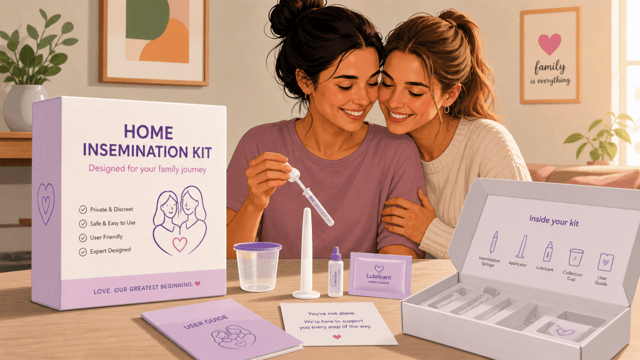
An insemination kit provides the essential tools needed for safe, hygienic home insemination when trying to conceive. These kits typically include a needleless syringe, sterile collection cup, soft catheter or insertion tube, sterile gloves and detailed instructions for use. More women and couples are choosing home insemination as a cost-effective and private alternative to clinical procedures, particularly when using a known sperm donor or donated sperm. Research shows that home insemination can achieve pregnancy rates of around 10-15% per cycle when timed correctly with ovulation, making it a viable option for many people. Understanding what comes in an insemination kit, how to use it safely and what factors affect success can help you make informed decisions about your fertility journey.
On CoParents.co.uk, a platform with over 150,000 members since 2008, people seeking sperm donors, co-parenting arrangements or fertility support can connect in a safe and informed community. This guide covers what insemination kits contain, how to use them safely, where to buy them in the UK, and tips for maximising success.
What Components Are Included in an Insemination Kit?
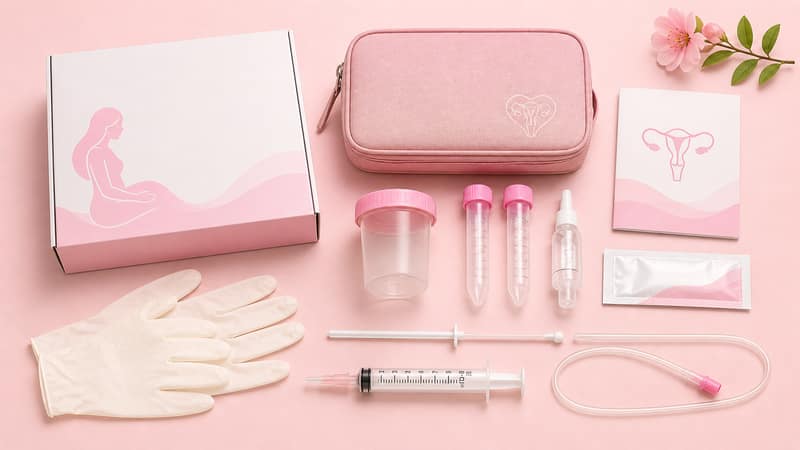
A typical insemination kit contains everything you need for safe home insemination. The most important component is a sterile needleless syringe, usually 1ml to 5ml in capacity depending on the kit. This syringe is designed for gentle insertion and controlled release of semen. Unlike medical syringes with needles, these are smooth and rounded for comfort and safety.
Ready to start your project?
Join +450,000 members who find their co-parent or sperm donor
Start free✓ Free ✓ No commitment ✓ Verified
A sterile collection cup is included in most kits for collecting the semen sample. This cup is pre-sterilised to prevent contamination. Some kits include a soft catheter or flexible insertion tube that attaches to the syringe, allowing deeper, more precise placement of semen near the cervix. This can improve success rates compared to using a syringe alone.
Other common components include sterile disposable gloves to maintain hygiene, cleansing wipes for the external genital area, and detailed step-by-step instructions. Some premium kits also include ovulation predictor strips to help you identify your most fertile days. Our guide on home insemination tips provides additional guidance.
How Do You Use an Insemination Kit Safely?
Using an insemination kit safely starts with thorough preparation and strict hygiene. Wash your hands with soap and water before handling any components. Lay out the contents on a clean surface covered with a sterile towel. Put on the gloves provided. Ensure the semen sample is fresh (ideally used within 30 minutes of collection) or properly thawed if frozen.
The process involves several careful steps. Draw the semen into the needleless syringe by placing the tip into the collection cup and slowly pulling back the plunger. Avoid air bubbles, as these can interfere with delivery. If using a catheter, attach it securely. Find a comfortable position, either lying on your back with hips slightly elevated, or semi-reclined with knees bent.
Gently insert the syringe or catheter tip into your vagina, aiming towards the cervix. Slowly depress the plunger to release the semen. Do not rush or force anything. Afterwards, remain lying down with hips elevated for 15 to 30 minutes. The NHS provides information on fertility treatments including artificial insemination. Our article on home insemination safety covers important precautions.
Where Can You Buy an Insemination Kit in the UK?
You can purchase an insemination kit from several UK sources. Online fertility retailers and specialist websites offer a wide range, typically priced between £10 and £50, with discreet packaging. Popular UK fertility supply sites stock CE-marked kits that meet safety standards.
Some pharmacies and chemists also stock basic kits, though availability varies. Larger pharmacy chains with expanded fertility ranges are more likely to carry them. You can buy components separately too, though pre-packaged kits offer the advantage of being sterilised and ready to use.
When choosing a kit, look for products that are CE-marked, individually wrapped and sterile, made from medical-grade materials, and include clear English instructions. Check expiry dates and ensure nothing is damaged in transit. Reading customer reviews helps you identify reliable brands. Our guide on donor sperm insemination provides additional information.
What Factors Affect Success With an Insemination Kit?
Success rates with an insemination kit depend heavily on timing. The most crucial factor is inseminating during your fertile window, particularly on the day of or just before ovulation. Track ovulation using predictor kits, basal body temperature charting, or cervical mucus monitoring. Inseminating in the two to three days before ovulation, and on the day itself, gives sperm the best chance of meeting the egg.
Sperm quality significantly impacts success. Fresh semen from a healthy donor typically has higher motility than frozen samples, though both can result in pregnancy. If using frozen sperm, ensure it has been properly stored and thawed according to instructions. The donor should ideally have had recent fertility testing. Our article on sperm count explains what affects male fertility.
Your own fertility health also plays a role. Women under 35 with regular cycles and no known fertility issues typically have the highest success rates. Factors that reduce success include irregular ovulation, blocked fallopian tubes, endometriosis, PCOS, or significant weight imbalance. If you have tried for six months (or three months if over 35) without success, consult your GP. Our guide on getting pregnant faster offers more tips.
How Does an Insemination Kit Compare to Clinical Procedures?
An insemination kit for home use differs from clinical intrauterine insemination (IUI). Home insemination places semen in the vagina near the cervix, while IUI involves a professional placing washed, concentrated sperm directly into the uterus. IUI typically has higher success rates per cycle (around 10-20%) compared to home insemination (10-15%), but is far more expensive, costing £800 to £1,600 per cycle in the UK.
The main advantage of an insemination kit is cost-effectiveness and privacy. A single kit allows multiple attempts at a fraction of clinical costs, done in your own home on your own schedule. It is less invasive and requires no medical appointments, making it ideal for those who prefer a low-intervention approach.
However, clinical IUI has advantages. Sperm washing selects the most motile sperm, potentially improving fertilisation rates. Professionals can monitor your cycle with ultrasound and trigger ovulation to optimise timing. IUI may be more effective for women over 35, those with irregular cycles, or where the male partner has borderline low sperm count. Our article on IUI versus IVF compares treatment options.
What Safety Precautions Should You Take With an Insemination Kit?
Safety is paramount. Always use a kit that is sterile, unopened and within its expiry date. Never reuse components, as this greatly increases infection risk. Each attempt should use completely fresh, sterile equipment. If any component appears damaged or discoloured, do not use it. Maintain strict hygiene throughout.
Screen sperm donors carefully. If using a known donor, insist on comprehensive sexual health screening including tests for HIV, hepatitis B and C, syphilis, chlamydia and gonorrhoea. These should be recent (within three months) and shared in writing. Frozen donor sperm from a licensed sperm bank will already have been screened and quarantined under HFEA regulations.
Stop the procedure immediately if you experience significant pain, bleeding or unusual discharge. Mild discomfort is normal, but sharp pain may indicate a problem. Never force the syringe or catheter. If you develop signs of infection (fever, severe abdominal pain, foul-smelling discharge), contact your GP promptly. Our guide on at-home insemination provides detailed safety information.
What Legal and Ethical Considerations Apply to Insemination Kits?
When using an insemination kit with donor sperm in the UK, important legal considerations apply. If you conceive using sperm from a known donor (rather than a licensed bank), that donor is legally considered the father unless specific legal steps are taken. He could potentially claim parental rights or be pursued for child support. Many people using known donors create a co-parenting or donor agreement, though these are not legally binding in the UK.
Using sperm from a licensed HFEA-registered sperm bank provides legal protection. Donors through licensed clinics have no legal rights or responsibilities towards children conceived. However, children born from donor sperm have the right to access identifying donor information at 18 if the donation was made after April 2005.
Ethical considerations include being honest with your future child about their conception. Most experts recommend age-appropriate disclosure from an early age. Consider the donor’s perspective too: ensure they fully understand and consent to the arrangement and their role. Clear communication helps prevent conflicts later. Our article on artificial insemination with sperm donors explores these issues.
Frequently Asked Questions
What is included in a home insemination kit?
A home insemination kit typically includes a sterile needleless syringe (1-5ml capacity), a sterile collection cup, sterile disposable gloves, cleansing wipes, and detailed instructions. Some kits also include a soft catheter for more precise placement, and ovulation predictor strips to help identify your fertile window.
How much does an insemination kit cost in the UK?
An insemination kit in the UK typically costs between £10 and £50 depending on the brand and contents. Basic kits with a syringe and cup are cheaper, while comprehensive kits with catheters and ovulation tests cost more. This is far less expensive than clinical IUI, which costs £800 to £1,600 per cycle.
How successful is home insemination with an insemination kit?
Success rates with an insemination kit are around 10-15% per cycle when timed correctly with ovulation, similar to natural conception rates. Success depends on the woman’s age, sperm quality, accurate timing, and overall fertility health. Women under 35 with no fertility issues typically have the highest success rates.
Is it safe to use an insemination kit at home?
Yes, using an insemination kit at home is safe when proper hygiene and precautions are followed. Always use sterile, unopened components, wash your hands, wear gloves, and never reuse equipment. Ensure the donor has been screened for infections. Stop immediately if you experience significant pain or bleeding, and seek medical advice if needed.
Where can I buy an insemination kit in the UK?
You can buy an insemination kit from online fertility retailers, specialist websites, and some larger pharmacies in the UK. Look for CE-marked products that are individually wrapped, sterile, made from medical-grade materials, and include clear English instructions. Check customer reviews and expiry dates before purchasing.
If you are considering home insemination, sperm donation or co-parenting arrangements, join CoParents.co.uk for free and connect with others who share your goals. Our community has been helping people build families since 2008.