
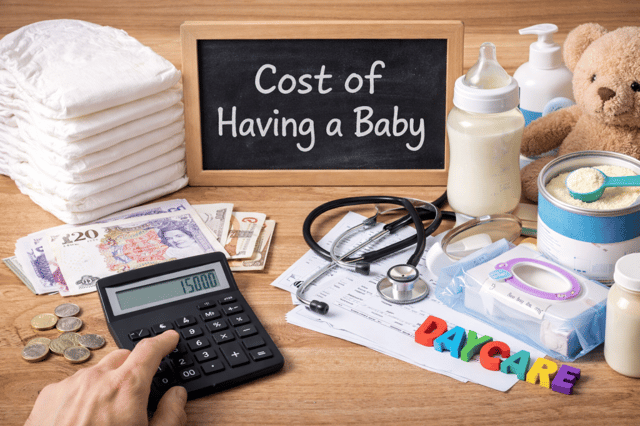
The cost of having a baby in the UK is higher than ever. According to the Child Poverty Action Group’s 2025 report, raising a child from birth to age 18 costs approximately £250,000 for a couple and £290,000 for a lone parent. These figures include housing, food, childcare, clothing, education, and everyday essentials. If you are planning to become a parent — whether as a couple, a single mum or dad, or through co-parenting — understanding the real cost of having a baby helps you prepare financially and avoid unnecessary stress.
What Are the Biggest Costs in the First Year?
The first year of a baby’s life typically costs around £8,460 on average. The largest single expense is childcare. A full-time nursery place for a child under two costs approximately £14,000 per year in the UK, though this figure drops significantly for families eligible for government-funded hours. Since September 2025, working parents in England can access 30 hours of funded childcare per week for children aged 9 months and over — a major saving that has cut average childcare costs by around 50% compared to 2024.
If you are also considering fertility treatment costs such as IVF or IUI, these should be factored into your overall budget as well. Beyond childcare, you will need to budget for essentials like a car seat (around £175), a pushchair or travel system (around £525), a cot and mattress (around £250), nappies (around £500 per year for disposables), and feeding supplies. Many of these items can be bought second-hand in excellent condition, which can reduce your first-year costs by hundreds of pounds.
Ready to start your project?
Join +450,000 members who find their co-parent or sperm donor
Start free✓ Free ✓ No commitment ✓ Verified
How Does the Cost of Having a Baby Increase Over Time?
The cost of having a baby does not stop after the first year — it evolves. During the pre-school years (ages 1 to 4), childcare remains the dominant expense. Once your child enters primary school, costs shift toward uniforms, school meals, trips, and after-school clubs. During the teenage years, spending on food, clothing, technology, and social activities increases. University tuition fees currently stand at £9,250 per year in England, adding a potential £27,750 to the total if your child pursues a degree.
The CPAG report highlights that costs have risen faster than incomes and social security support, meaning many families — including those in full-time work — now struggle to cover the basic cost of having a baby and raising a child. A lone parent working full time on the minimum wage can only cover about 69% of the basic costs of raising two children.
How Can You Save Money When Planning for a Baby?
Smart planning can make the cost of having a baby much more manageable. Here are five practical steps.
First, set a realistic budget before trying to conceive. Review your income, monthly outgoings, and savings. Factor in the cost of having a baby from day one: nappies, feeding, childcare, and any additional housing costs if you need a bigger home.
Second, start saving early. Even small monthly contributions add up over time. Cut discretionary spending where possible — a year of modest savings before your baby arrives creates a valuable financial cushion.
Third, buy second-hand where it makes sense. Friends, family, charity shops, and online marketplaces are excellent sources for baby clothes, toys, and equipment. Babies outgrow items quickly, so second-hand products are often barely used. If you are co-parenting with someone in a separate household, sharing costs on items like car seats and highchairs helps both parties.
Fourth, claim every benefit you are entitled to. Child Benefit currently pays £25.60 per week for your first child and £16.95 for each additional child. Tax-Free Childcare provides up to £2,000 per year per child. The Sure Start Maternity Grant offers a one-off £500 payment for eligible families. Universal Credit can cover up to 85% of childcare costs for eligible parents. Check the GOV.UK childcare calculator to see what support applies to your situation.
Fifth, talk openly about money with your partner or co-parent. Agree on expectations around schooling, childcare arrangements, and how costs will be shared. On platforms like CoParents.co.uk, a co-parenting and sperm donation network with over 150,000 users since 2008, many intended parents discuss financial responsibilities before conception to avoid misunderstandings later.
Frequently Asked Questions
What is the average cost of having a baby in the UK in 2025?
The first year alone costs around £8,460 on average. Over 18 years, the total cost of having a baby and raising a child reaches approximately £250,000 for a couple and £290,000 for a single parent, according to the CPAG.
Can I get free childcare in the UK?
Yes. Since September 2025, eligible working parents in England can claim 30 hours of funded childcare per week for children aged 9 months and over. All three- and four-year-olds receive 15 hours regardless of parental income. These schemes significantly reduce the financial burden in the early years.
How can co-parents share the cost of having a baby?
Co-parents typically agree on a cost-sharing arrangement before conception. This can cover childcare, housing, education, and everyday expenses. A written co-parenting agreement — while not legally binding — helps set clear expectations and reduces the risk of financial disputes later.