
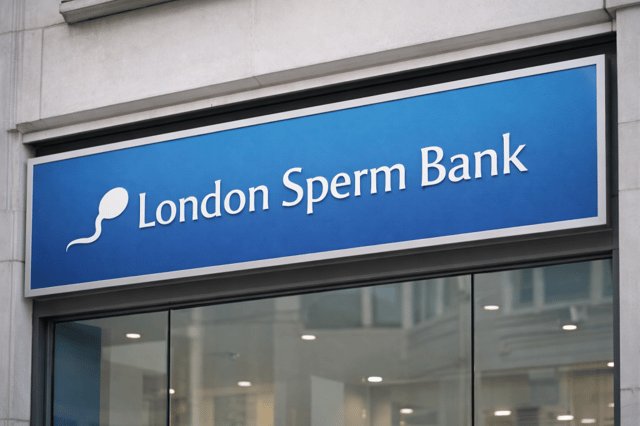
The London Sperm Bank is the UK’s largest sperm bank, established in 1992 and responsible for helping thousands of families conceive through donor sperm. If you are considering using donor sperm to start or grow your family, understanding how the London Sperm Bank works — from donor selection and pricing to screening standards and legal protections — is an essential first step. With vials priced at £950 and a fully HFEA-regulated process, it remains one of the most established providers in the country. This guide covers everything you need to know about this facility and how it fits into the wider UK fertility landscape.
What Is the London Sperm Bank and How Does It Work?
The London Sperm Bank is an HFEA-licensed facility that recruits, screens, and stores donor sperm for use in fertility treatments across the UK. It operates in partnership with the London Women’s Clinic and The Bridge Centre, giving patients access to an extensive catalogue of UK-recruited donors. Every donor listed on the bank undergoes rigorous health screening, genetic testing, and counselling in line with HFEA regulations.
To order donor sperm, you must be registered as a patient at an HFEA-licensed fertility clinic. You can browse donor profiles through the bank’s online catalogue or mobile app, filtering by criteria such as ethnicity, height, eye colour, hair colour, education, and personal interests. Each profile includes a physical description, a personal statement from the donor, and details about their medical history. The bank recommends purchasing 2 to 3 vials to ensure your chosen donor remains available for multiple treatment cycles or future sibling attempts.
Ready to start your project?
Join +450,000 members who find their co-parent or sperm donor
Start free✓ Free ✓ No commitment ✓ Verified
How Much Does It Cost to Use the London Sperm Bank?
A single vial of donor sperm from the London Sperm Bank costs £950. Delivery within the UK is free or costs approximately £150 depending on the arrangement with your clinic. On top of the sperm cost, you will need to budget for your fertility treatment itself. A cycle of IUI (intrauterine insemination) at a private clinic typically costs between £800 and £1,500, while IVF with donor sperm ranges from £5,000 to £8,000 per cycle. According to the NHS, IUI is often the first-line treatment recommended for women using donor sperm.
For comparison, other UK sperm banks offer different pricing. The London Fertility Centre charges around £650 per ampoule, Birmingham Spermbank around £430, and Manchester Fertility’s Semovo bank around £850 per vial. International options such as Cryos (Denmark) and the European Sperm Bank may offer lower per-vial prices, but you should factor in shipping costs and confirm that the donor meets HFEA identity-release requirements before ordering.
If cost is a concern, platforms like CoParents.co.uk — a co-parenting and sperm donation network with over 150,000 users since 2008 — connect intended parents with free sperm donors who offer their sperm altruistically. While this route reduces costs significantly, the HFEA strongly recommends that all donor sperm is used at a licensed clinic to ensure proper screening and legal protection.
What Screening Do London Sperm Bank Donors Undergo?
Every donor at the bank goes through one of the most thorough screening processes in the UK. The process includes a semen analysis to assess sperm count, motility, and morphology, followed by a test freeze to confirm the sperm survives cryopreservation at a quality suitable for treatment. Around half of men who reach the semen analysis stage are rejected because their sperm does not meet the higher-than-average thresholds required for banking.
Blood and urine tests screen for HIV, hepatitis B and C, syphilis, HTLV, chlamydia, gonorrhoea, and CMV. A karyotype test checks chromosomal integrity, and cystic fibrosis carrier testing is standard. A detailed family medical history covering at least three generations is reviewed by a clinical team. Donors also undergo mandatory implications counselling with a specialist to ensure they understand the long-term consequences of donation, including the possibility that donor-conceived people may contact them after turning 18.
The bank recruits donors aged 18 to 41 and accepts only those who pass every stage of screening. The entire process typically takes several months, with donors attending weekly clinic visits to provide samples. Donors receive up to £45 per visit for expenses — sperm donation in the UK is altruistic, not commercial.
How Do You Choose the Right Donor From the London Sperm Bank?
Choosing a sperm donor is a deeply personal decision. The bank’s online catalogue allows you to search by physical characteristics, ethnicity, education, occupation, hobbies, and personality traits. Many profiles include a personal statement where the donor explains why they chose to donate. Some donors also provide childhood photos.
When selecting a donor, consider factors beyond physical appearance. Think about the values and qualities you find important, but remember that genetics are only part of who your child will become. The environment you create and the love you provide will shape your child far more than any donor profile.
The bank offers vials prepared for different treatment types: IUI-ready (washed, MOT 20+), ICI (unwashed, MOT 15+), IVF (MOT 10+), and ICSI. Your fertility clinic will advise which preparation type is best for your treatment plan. It is worth noting that motile sperm counts can fluctuate by 20% to 25% between the bank’s advertised values and what your clinic measures after thawing — this is normal variation and does not indicate a quality issue.
What Legal Protections Apply to London Sperm Bank Donations?
All donations through the bank are governed by the Human Fertilisation and Embryology Act 2008. Donors at HFEA-licensed clinics have no legal parental rights or financial obligations towards any children born from their sperm. The recipient is always the legal mother, and if she has a spouse or civil partner who consented to treatment, that partner is the child’s legal second parent.
Under UK law, each donor’s sperm can be used to create a maximum of 10 families. This limit is designed to reduce the risk of donor-conceived half-siblings unknowingly forming relationships and to protect the welfare of donor-conceived people. However, if a donor has also donated abroad, the 10-family limit applies only to UK families — international limits are governed by the laws of each country.
Since April 2005, all UK sperm donors must be identity-release. Donor-conceived individuals can request non-identifying information about their donor at age 16 and full identifying details at age 18 through the HFEA. The bank maintains a portal to link donor records with patients, making traceability straightforward. The HFEA’s clinic search tool allows you to compare donor waiting times and clinic ratings before starting treatment.
How Does the London Sperm Bank Compare to Other UK Options?
The London Sperm Bank is not the only route to donor sperm in the UK. Several other UK sperm banks and fertility clinics operate their own donor programmes, and international banks also ship to UK clinics.
Key UK alternatives include the London Fertility Centre (£650 per ampoule, own donor bank), Birmingham Spermbank at Birmingham Women’s Hospital (£430 per vial, NHS centre), Manchester Fertility’s Semovo (£850 per vial, with bulk discounts), and the Edinburgh Egg and Sperm Bank (NHS Scotland programme). International options include Cryos (Denmark), European Sperm Bank (Denmark), Fairfax Cryobank (US), and Xytex (US), all of which export HFEA-compliant vials to UK clinics.
When choosing between banks, consider donor diversity, vial pricing, delivery times, treatment compatibility, and whether the bank’s donors match your preferences in terms of ethnicity, background, and personal characteristics. The bank’s advantage lies in its UK-recruited donor pool, which means all donors are identity-release by default and subject to the full HFEA screening framework without the complexities of international import.
What Should You Know Before Ordering From the London Sperm Bank?
Before placing an order, make sure you are registered at an HFEA-licensed clinic. The bank will liaise directly with your clinic to organise dispatch. You can only order vials from one donor at a time, but you may purchase as many vials as you need from that donor. Reserving extra vials is recommended if you plan to have siblings, as popular donors can sell out.
All UK licensed clinics are required to offer implications counselling before you begin donor treatment. This counselling covers the emotional, social, and legal aspects of donor conception, including when and how to tell your child about their origins. Organisations like the Donor Conception Network provide ongoing support for donor-conceived families.
If you are considering alternatives to sperm banks, CoParents.co.uk offers a platform where intended parents can connect with known donors and co-parents directly. This route gives you more personal contact and transparency, though you should always arrange proper health screening and, ideally, use a licensed clinic for the insemination itself.
Frequently Asked Questions
How much does a vial of sperm cost at the London Sperm Bank?
A single vial costs £950 at the London Sperm Bank. Delivery within the UK may be free or cost approximately £150 depending on your clinic arrangement. You should also budget for treatment costs: IUI typically costs £800 to £1,500 per cycle, while IVF with donor sperm ranges from £5,000 to £8,000.
Can I use London Sperm Bank sperm for home insemination?
The bank does not supply sperm directly to individuals for home use. All vials must be sent to an HFEA-licensed fertility clinic. If you want to arrange home insemination with a known donor, platforms like CoParents.co.uk can help you find a willing donor, but the HFEA recommends using a clinic for proper screening and legal protection.
How diverse is the London Sperm Bank’s donor pool?
The bank recruits donors from a range of ethnic and cultural backgrounds. However, like most UK banks, there are ongoing challenges in recruiting donors of all ethnicities. If you cannot find an appropriate match domestically, your clinic may be able to import HFEA-compliant sperm from international banks with wider ethnic diversity.
What happens if my chosen London Sperm Bank donor runs out of vials?
If your donor’s vials are no longer available, you will need to select a new donor. To avoid this, the bank recommends purchasing 2 to 3 vials upfront. This is especially important if you plan sibling treatments, as each donor can only create up to 10 families in the UK.