
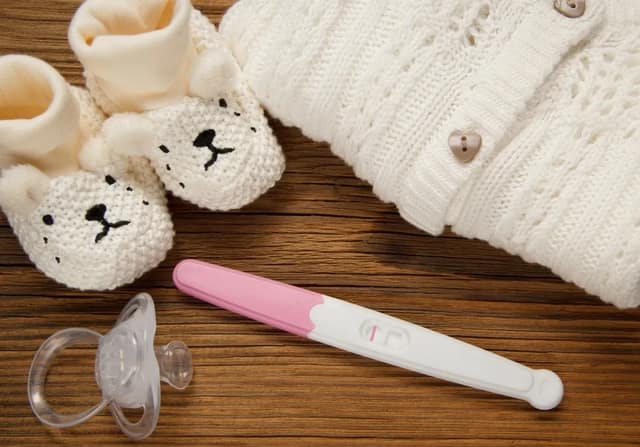
Getting pregnant is the result of timing intercourse around ovulation, when a released egg can be fertilised by sperm. The single most important step in getting pregnant is identifying your fertile window, since the egg survives only 24 hours while sperm can last several days in the fallopian tubes.
If you have decided to start a family, you are probably confused by all the conflicting information online. Here are clear answers to four of the most important questions about getting pregnant that you might be thinking about.
Do pregnancy positions help with getting pregnant?
All sexual positions can result in pregnancy, and there has not been enough research to say one is definitively better than another. However, the closer the sperm is to the cervix, the better. On that basis, the missionary and rear-entry positions appear to be the most effective at achieving this.
Ready to start your project?
Join +450,000 members who find their co-parent or sperm donor
Start free✓ Free ✓ No commitment ✓ Verified
Does weight affect getting pregnant?
Being overweight or underweight should not, by itself, reduce your chances of getting pregnant, as long as you have regular periods, which means you are ovulating. However, weight can affect how a pregnancy progresses. To avoid complications, it is better to reach a healthy weight before you conceive.
Underweight
If you are underweight because you are not eating properly, or you have an eating disorder, your baby may not get the nourishment it needs to develop. The baby could be born underweight, which can lead to problems such as low blood sugar and feeding difficulties.
Overweight
Many overweight women conceive and have trouble-free pregnancies. However, if you are clinically obese, with a BMI of 30 or over, there is a greater risk of miscarriage, gestational diabetes, and high blood pressure. Your baby might also weigh more than normal, which can mean delivery by caesarean section.
How much sex do you need for getting pregnant?
You can only conceive when you ovulate, and once the egg is released it lives for just 24 hours. By contrast, sperm survives in the fallopian tubes for a few days, so an egg can be fertilised if you have sex just before or just after ovulation.
If you have regular periods, you can roughly work out when ovulation happens. The first day of your period is the start of your cycle. Count the days between each period over three months. With a 28-day cycle, you ovulate around day 14, so having sex on days 12 to 16 improves your chances of getting pregnant. With a 32-day cycle, you ovulate around day 16, so sex between days 14 and 18 may be beneficial.
If your periods are irregular and you cannot map your cycle, then having sex every couple of days should still increase your chances. The NHS confirms that regular intercourse across the month is the simplest approach when timing is uncertain.
Why does sperm health matter for getting pregnant?
Smoking, drinking, and drug use all affect sperm health. It is best to drink only in moderation and to cut out drugs and smoking entirely. These changes benefit anyone trying to conceive, whether with a partner or through a known donor.
Research also suggests that saturated fat may lower sperm count. Good fats, such as those in oily fish, nuts, and avocados, are fine. However, if you want your sperm to be at its healthiest, it is wise to cut down on takeaways for a while. It can take around three months for new, healthier sperm to mature, so changes made now pay off later.
Frequently asked questions
How long does getting pregnant usually take?
Around 84% of couples conceive within a year of regular unprotected sex, and most within six months. Age, health, and cycle regularity all influence the timeline, so do not be discouraged if it takes a few months.
When is the best time for getting pregnant in my cycle?
Your fertile window is the few days before and including ovulation. For a 28-day cycle this is roughly days 12 to 16. Tracking your cycle over three months helps you predict it more accurately.
Do sex positions really improve the chances of getting pregnant?
There is no strong evidence that one position works better than another. Positions allowing deeper sperm deposition near the cervix may help slightly, but timing intercourse around ovulation matters far more.
Can I get pregnant with irregular periods?
Yes, though predicting ovulation is harder. Having sex every two to three days throughout the month covers the fertile window without needing to track it precisely. A GP can help if periods are very irregular.
What can men do to improve fertility?
Stopping smoking, limiting alcohol, avoiding drugs, eating healthy fats, and maintaining a healthy weight all support sperm quality. Because sperm takes about three months to mature, start these changes early.
The most important thing you can do is relax, enjoy the process of getting pregnant, and make the most of plenty of time together. If you are exploring co-parenting or donor conception in the UK, CoParents.co.uk connects you with co-parents and sperm donors in a safe, supportive community. Create your free profile to start your path to parenthood today.