
IVF success rates depend mainly on age, egg quality and the underlying cause of infertility, with UK patients under 35 seeing average birth rates of around 35% per embryo transferred. If you and your partner have been trying to conceive without success, understanding these figures can help you make an informed decision about treatment. This guide breaks down what affects IVF success rates, how the numbers are actually calculated, and what you can do to improve your own chances.
What Do IVF Success Rates Actually Mean?
When clinics talk about IVF success rates, they usually mean one of two things: the pregnancy rate or the live birth rate per embryo transferred. These are not the same figure, and mixing them up can give a misleading picture of your real chances.
A pregnancy rate counts every positive test, including pregnancies that later end in miscarriage. A live birth rate only counts cycles that result in a baby. When comparing clinics or reading about the differences between IUI and IVF, always check which measure is being used.
Ready to start your project?
Join +450,000 members who find their co-parent or sperm donor
Start free✓ Free ✓ No commitment ✓ Verified
However, a single cycle rarely tells the whole story. Because success rates are often reported per embryo transferred rather than per patient, someone who needs two attempts before a successful transfer will have a different personal outcome than the headline percentage suggests.
How Are IVF Success Rates Calculated in the UK?
In the UK, the Human Fertilisation and Embryology Authority (HFEA) collects data from every licensed clinic and publishes national averages every year. This is the most reliable source for comparing figures, rather than relying on a single clinic’s marketing page.
According to the regulator, the average IVF pregnancy rate using fresh embryo transfers reached 31% per transfer in 2022, with the highest rates among patients aged 18 to 34. For context, one full cycle of treatment typically takes three to six weeks from the first injection to the pregnancy test.
Consequently, when a clinic advertises its own success rates, it is worth asking whether the figure includes all patients or only a favourable subgroup, since smaller clinics can skew their averages by treating fewer complex cases.
IVF Success Rates by Age
Age remains the single biggest factor behind IVF success rates, because both egg quantity and egg quality decline over time. The table below summarises HFEA figures for birth rates per embryo transferred, using patients’ own eggs.
| Age group | Approximate birth rate per embryo transferred |
|---|---|
| Under 35 | 32–35% |
| 35–37 | 25–28% |
| 38–39 | 19–22% |
| 40–42 | 10–12% |
| 43–44 | 4–6% |
These ranges are national averages rather than guarantees, and your own clinic’s figures may differ depending on the mix of patients they treat. Even so, the pattern is consistent across almost every published dataset: the earlier treatment begins, the higher the chances of success.
It is also worth noting that IVF success rates have generally improved over the past decade across every age band, thanks to better embryo screening and more precise hormone dosing. For instance, patients aged 40 to 42 saw their birth rate per embryo transferred roughly double between 2012 and 2022, according to HFEA figures. This trend is encouraging, but it does not remove the underlying effect of age on egg quality.
Because of this decline, some patients over 40 are advised to consider donor eggs, which tend to produce more consistent outcomes across all age brackets than treatment using a patient’s own eggs.
NHS Eligibility and How It Affects Your Chances
Whether you can access NHS-funded treatment also shapes your realistic chances, since delays while self-funding cycles privately can push patients into an older, less favourable age bracket. According to the NHS guidance on IVF, patients aged 39 or under may be offered three full funded cycles, while those aged 40 to 42 may be offered one, subject to local Integrated Care Board policy.
Before NHS-funded IVF is offered, many areas require evidence of infertility, such as two years of unsuccessful attempts to conceive naturally or several rounds of artificial insemination. If you are exploring sperm donor insemination as a first step, it is worth understanding how many cycles your local board typically requires before referring you onward to IVF.
Because funding rules vary so widely by postcode, two patients with identical medical histories may be offered very different numbers of cycles depending purely on where they live.
Factors That Influence IVF Success Rates
Beyond age, several other factors affect IVF success rates, and being aware of them can help you have a more informed conversation with your clinic.
- Body mass index (BMI): both very low and very high BMI are linked to lower implantation rates and higher risks during treatment.
- Smoking and alcohol: smoking in particular is associated with reduced egg and sperm quality and a lower chance of a live birth.
- Underlying diagnosis: conditions such as endometriosis or blocked fallopian tubes respond differently to treatment than unexplained infertility.
- Sperm quality: low sperm count or poor motility can reduce fertilisation rates even when egg quality is good.
- Embryo quality and number transferred: transferring a single, carefully selected embryo is now standard practice in the UK to reduce multiple pregnancy risk.
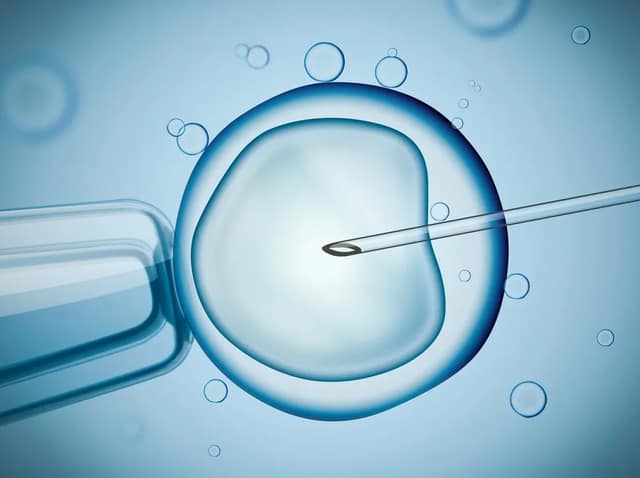
Clinics assess most of these factors before starting treatment, and adjusting lifestyle habits several months in advance can meaningfully improve outcomes for some patients. In cases of severe male factor infertility, a technique called intracytoplasmic sperm injection (ICSI), where a single sperm is injected directly into the egg, is often used alongside standard IVF to improve fertilisation rates.
Can You Improve Your IVF Success Rates?
While age cannot be changed, there are practical steps that may help improve IVF success rates for many patients. Maintaining a healthy weight, stopping smoking, and moderating alcohol intake in the months before treatment are consistently associated with better outcomes.
Additionally, choosing a clinic with strong, transparent reporting to the HFEA, rather than one that only publishes its best-performing statistics, gives a clearer picture of what to expect. Asking your clinic for the live birth rate per cycle started, rather than per embryo transferred, also gives a more realistic sense of your overall odds.
For some patients, especially those with a low ovarian reserve or who have had several unsuccessful cycles, treatment using a known donor for sperm, or donor eggs, can meaningfully raise the odds of a successful pregnancy compared with continuing on the same path.
Donor Eggs, Donor Sperm and IVF Success Rates
Treatment using donor eggs tends to produce higher and more consistent success rates across every age group, since donor eggs typically come from younger women with good ovarian reserve. This is one reason more patients over 40 are choosing this route rather than repeated cycles with their own eggs.
Similarly, for same-sex couples and single people building a family, IVF is sometimes recommended after several unsuccessful cycles of donor sperm insemination. If you are still weighing up your options, our guide to donor sperm insemination explains how IUI compares with IVF in terms of cost, invasiveness and typical success rates.
Whichever path you take, it helps to understand your legal position from the outset. Our overview of donor conception and co-parenting law in the UK covers parental rights and responsibilities when using a known or clinic-based donor.
On CoParents.co.uk, many members begin their journey by connecting with a known sperm donor or a co-parent before deciding whether IUI or IVF is the right next step for their situation.
Frequently Asked Questions About IVF Success Rates
What is a good IVF success rate?
For patients under 35, a birth rate of around 32% to 35% per embryo transferred is considered a strong, typical result in the UK, and it sits close to the national average reported by the HFEA. Above age 40, even single-digit IVF success rates are broadly in line with the national picture, so context and your own age bracket matter more than the headline number alone.
Do IVF success rates improve with multiple cycles?
Yes. While a single cycle might carry, for example, a 30% chance of success, the cumulative chance across two or three cycles is higher, which is why many clinics recommend planning for more than one attempt from the outset.
How many rounds of IVF are typically needed?
Many patients need more than one cycle, and clinics often review the treatment plan after three unsuccessful attempts to consider alternatives such as donor eggs or further diagnostic tests.
Does the NHS cover multiple IVF cycles?
It depends on your Integrated Care Board and your age. Patients aged 39 or under may be offered up to three funded cycles, while those aged 40 to 42 are typically offered one, provided they meet local eligibility criteria.
Can lifestyle changes really affect IVF success rates?
Yes, to a meaningful degree. Reaching a healthy BMI and stopping smoking before treatment are two of the most consistently evidenced ways patients can improve their own IVF success rates, alongside the factors your clinic controls.
Understanding what really drives IVF success rates, from age and lifestyle to the treatment path you choose, puts you in a much stronger position when discussing options with your clinic. If you are exploring routes to parenthood before or alongside fertility treatment, whether that means finding a known sperm donor or connecting with someone to co-parent, CoParents.co.uk can help you find people who share your parenting project. Register for free to start browsing verified profiles and take the next step towards building your family.